 SWBTEC


Swing Bearing Replacement: What To Check Before You Order
On an excavator, a swing bearing sits between the upper structure and the undercarriage. It allows the upper structure to turn while carrying the forces created by the machine’s weight, digging work, and movement. When the machine develops play or an unfamiliar sound during rotation, the bearing deserves attention. Yet ordering a replacement from the words “swing bearing” alone is a costly shortcut: the same name can cover different ring sizes, gear arrangements, mounting patterns, and load capabilities.
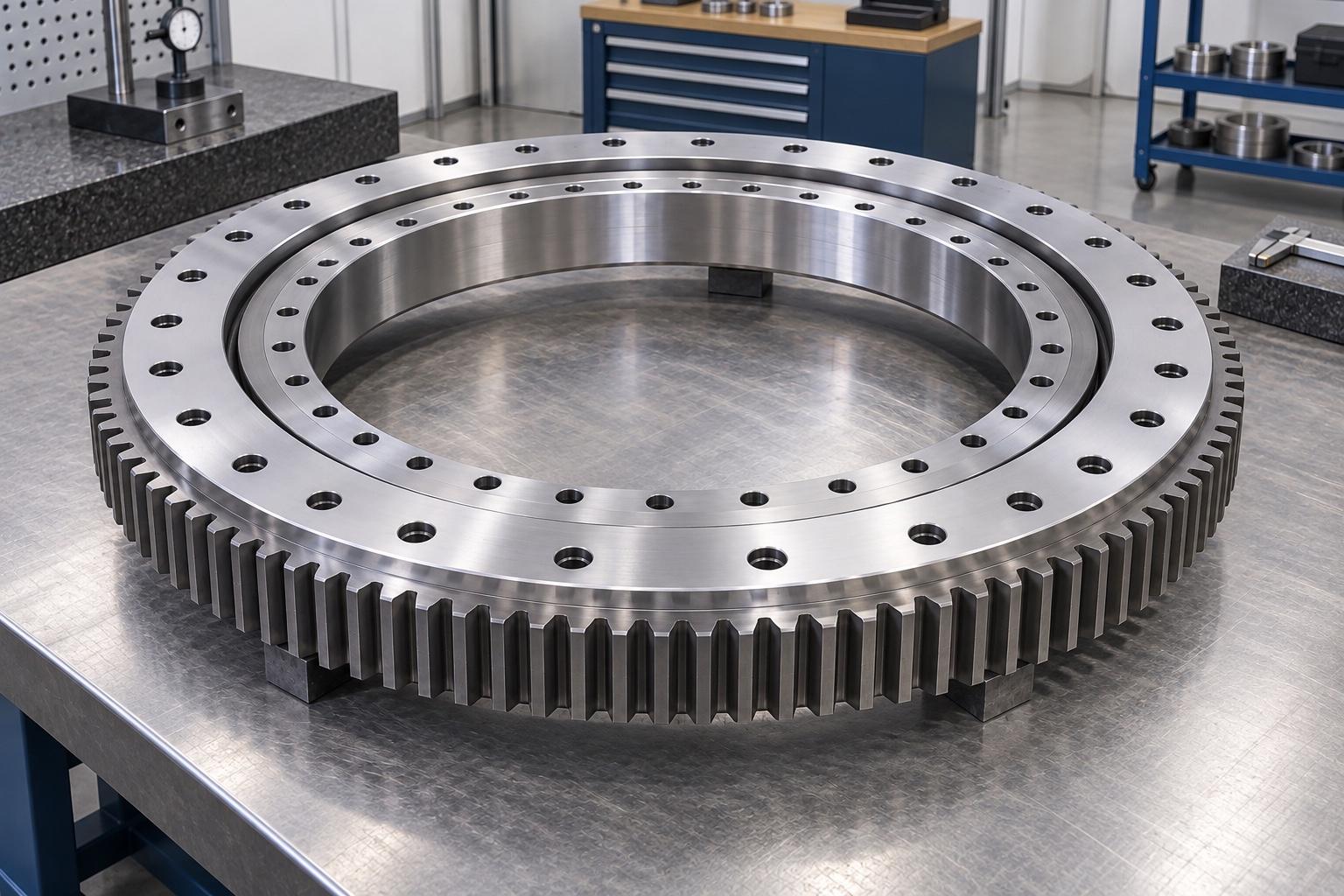
What Does “Swing Bearing” Identify?
In excavator parts discussions, swing bearing often means the slewing bearing, also called a slewing ring or slew ring. The component has inner and outer rings with rolling elements between them. Depending on the design, a gear may be cut on one ring so a pinion can drive rotation. The bearing supports the rotating structure; the pinion, reducer, motor, and brake are separate parts unless the agreed supply scope says otherwise.
That distinction matters when a parts request mentions a “swing gear.” It might refer to the bearing’s gear teeth or another part of the drive. Before requesting a quote, identify the failed component on the machine’s parts drawing and state whether the bearing alone or a larger assembly is required.
Check The Symptom Before Naming The Failed Part
Excess movement felt between the upper and lower structures does not, by itself, prove that the bearing raceways are worn. The apparent play can also include gear backlash, reducer play, or movement in the supporting structure. Unusual noise can arise from tooth contact, poor lubrication, uneven mounting, loose fasteners, or an overloaded bearing.
Record when the symptom occurs: during starting, braking, reversing, or at particular positions around the full rotation. Note any visible seal damage, grease leakage, concentrated tooth wear, or changing drive effort. A qualified maintenance team should compare measurements taken at defined machine positions and points with the equipment maker’s limits. This separates a bearing problem from a drive or mounting problem before parts are ordered.
Build A Replacement Data Pack
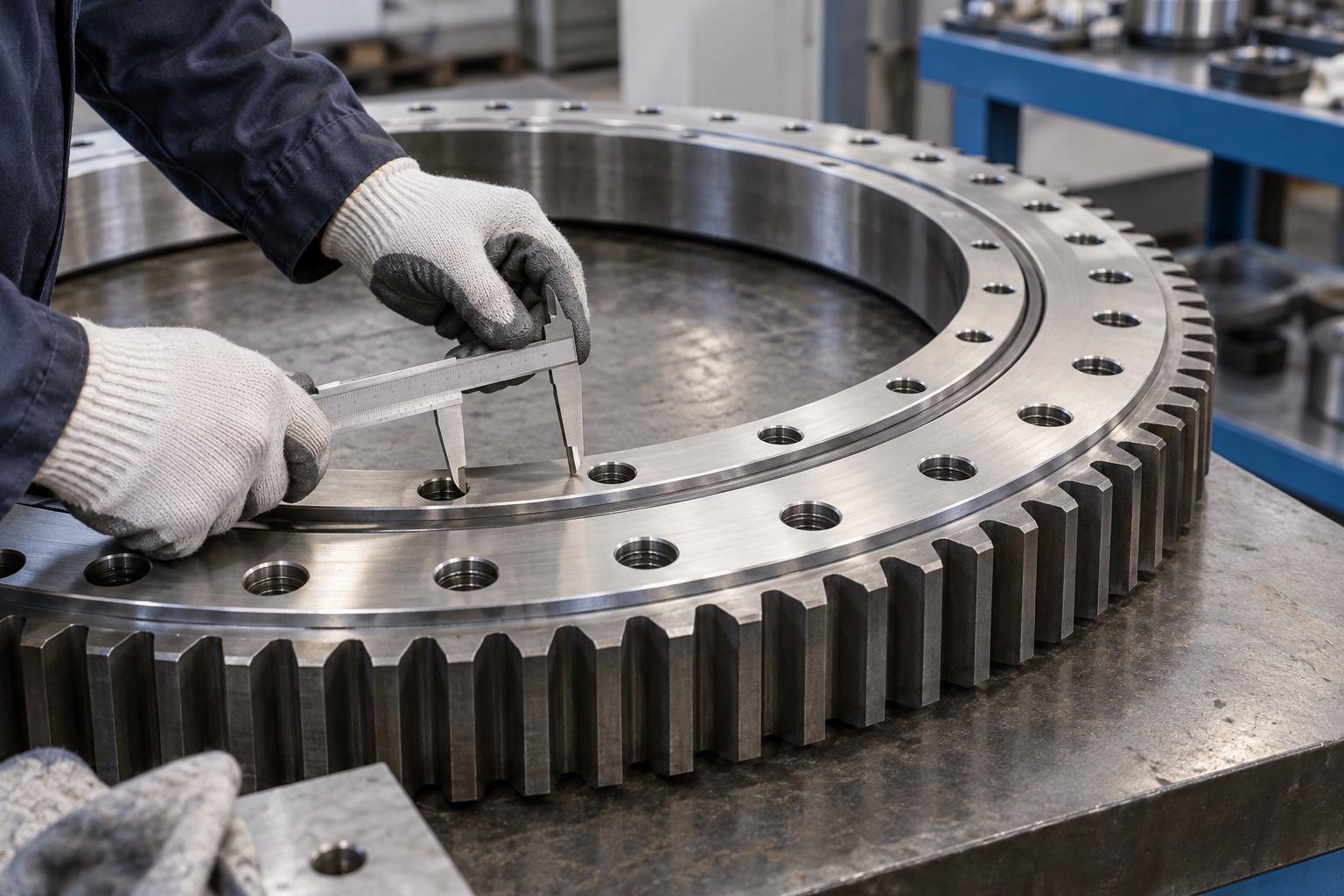
Start with the excavator model and serial number, the original bearing part number, and the latest controlled drawing available. Record the outer and inner diameters, total height, pilot or locating features, bolt-hole count and pitch circles on both rings, and the orientation of the fixed and rotating rings. Photograph the identification marks and the installed gear and pinion layout.
If the bearing is geared, specify whether the teeth are internal or external. The drawing should also establish the gear module, tooth count, pressure angle, profile details, face width, and mating pinion data. The center distance and backlash must work with the actual machine. A ring that fits the opening but has different teeth or bolt-hole positions is not a drop-in replacement.
The old part is useful evidence, but wear and previous repairs can change measured dimensions. Compare measurements with the original drawing wherever possible. Include the required internal clearance, sealing arrangement, lubrication access, and the location of the soft zone or filling plug. Two rings that look alike in a photograph can differ in any of these details.
Fit Is Only The First Engineering Check
A swing bearing carries axial and radial forces together with an overturning moment. Excavator duty adds digging shocks, slope work, frequent reversals, and braking. The bearing, bolts, and supporting steel therefore need to be checked against load cases that actually occur together. Machine weight or bearing diameter alone cannot establish the required capacity.
Ask the equipment team for operating load cases, duty cycle, and relevant attachments, especially if the machine has been modified. A replacement assessment should check the candidate bearing’s raceway and bolt capacities, expected service life under the duty cycle, gear loading, and the stiffness and flatness of the mounting structures. Changing from a ball design to a roller design, or from one row arrangement to another, is a design change that needs its own review.
Plan The Installation Conditions
Even a suitable bearing can run poorly if its mounting faces are distorted or contaminated. Check the condition and flatness of both support surfaces, the bolt specification and tightening method, and the gear mesh around the full rotation. The bearing and gear may have separate lubrication points. Protect seals from damage and keep dirt and water out of the raceway during the work.
Replacing an excavator swing bearing involves supporting and lifting the upper structure. The machine maker’s service procedure and a properly engineered lifting plan should govern that work. After assembly, the maintenance team should verify smooth rotation, gear contact and backlash, fastener records, lubrication, sealing, and any abnormal noise before returning the machine to normal duty.
Choosing A Candidate From Slewbearingtec
Slewbearingtec’s range includes internal-gear, external-gear, and gearless slewing bearings, as well as products presented for excavator applications. Those categories provide a starting point, not a compatibility claim for a particular machine. Send the machine and bearing identifiers, controlled interface drawing, gear information, and operating conditions with the inquiry. With those details, the discussion can move from a familiar part name to a replacement that can be checked against the actual excavator.
