 SWBTEC


Slewing Bearing
Slewing Bearing: An In-Depth Engineering Handbook from Selective Design to Maintenance
In the field of modern heavy industry and precision machinery, slewing bearing is known as the “axis of the machine”. It is not only a simple rolling bearing, but also a comprehensive load transmission component that can bear axial load, radial load and overturning moment at the same time. Whether it is a tower crane on a construction site or a high-precision medical CT scanner, the slewing ring bearing is the core component for rotation and load transfer.
As the 1 mechanical engineer with 20 years of experience, I know the impact of a high-performance slew bearing on overall reliability. This guide will provide you with in-depth industry insight from the technical parameters, structural classification, selection logic and maintenance points.
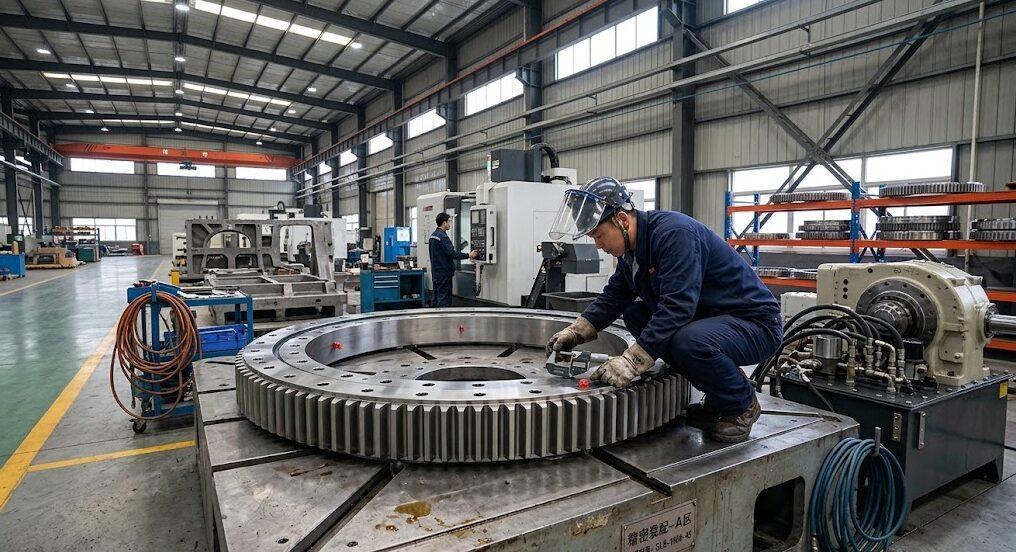
Core Structure And Working Principle
The basic construction of Slewing ring bearings is different from ordinary deep groove ball bearings. It is usually composed of inner ring, outer ring, rolling body (ball or roller), isolation block (or cage), sealing device and lubricating oil nozzle.
Structure composition
Inner and outer rings (Rings): High-strength medium carbon steel or alloy steel, one of which usually has gears (Internal or External Gear).
Rolling body (Rolling Elements): common steel ball or cylindrical roller.
Spacer/cage (Spacers): used to prevent the rolling elements from rubbing against each other and reduce the rotating torque.
Seals: Prevent external contaminants from entering the track and lock the grease.
Load Transfer Logic
Unlike ordinary bearings that only handle radial or axial forces, the slew bearings is able to handle the overturning moment (Overturning moment) through its unique track design. This allows the single bearing to support a large rotating structure, simplifying the design of the whole machine.
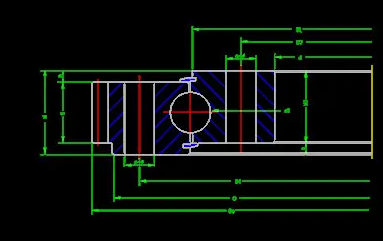
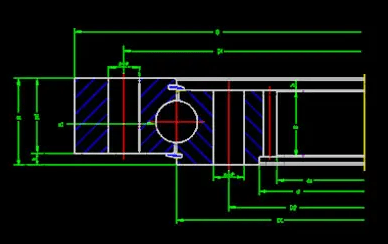
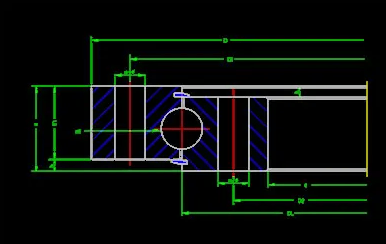
Core Classification: Choose The Slewing Ring Bearings That Best Suits You
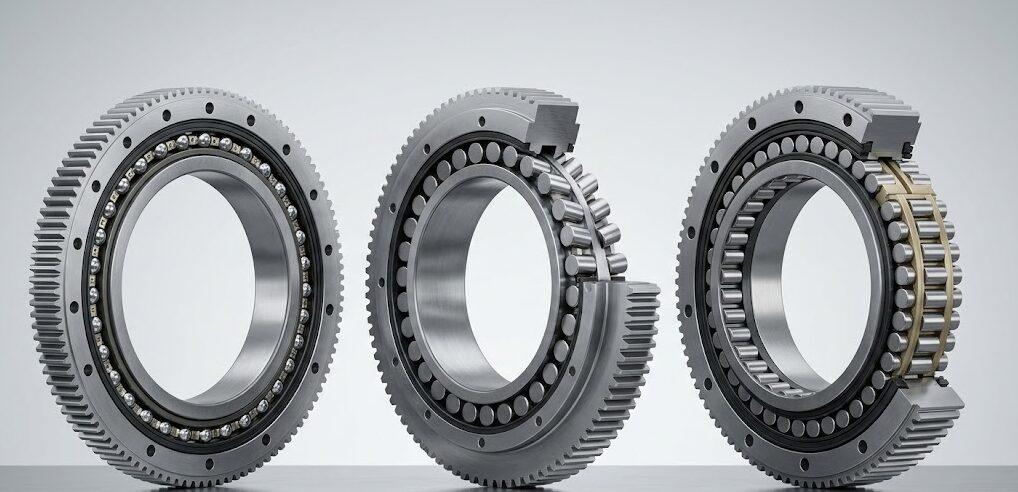
Depending on the arrangement and contact of the rolling elements, slewing bearing manufacturer usually provide the following mainstream structures. The following table compares their performance differences:
| Structure type | Load capacity | Rotational accuracy | Operational stability | Typical applications |
| Single-row ball | medium | generally | high | Conveyor, small crane |
| Cross Roller | high | Extremely high | middle | Industrial robots, machine tools |
| Three-row roller | Extremely high | high | generally | Tunnel boring machines and heavy cranes |
| Double-row ball | high | generally | high | Mining equipment |
Cross Roller Slewing Bearing
The Cross roller slewing bearings is characterized by a 90-degree cross arrangement of rollers within the track. This design provides extremely high radial stiffness and overturning stiffness, which can eliminate radial play. Where high positioning accuracy and rigidity are required, the cross roller slewing bearing is preferred.
Triple-row Roller Slewing Ring
This is the largest slewing bearings with the strongest carrying capacity. It greatly improves the structural strength of the bearing by bearing the axial force, radial force and overturning moment by three rows of rollers respectively, and is the standard configuration of crane slewing bearing under extreme working conditions.
Depth Analysis: Core Materials And Heat Treatment Processes That Determine The Life Of Slewing Bearings
When assessing the supply capacity of slewing bearings suppliers, experienced engineers will not only look at the parameters on the specification, but will examine the metallurgical quality of their raw materials and the process details of heat treatment. The failure of Slewing ring bearings is often not a design error, but due to improper material selection or small deviations in heat treatment depth.
Engineering logic for material selection: 50Mn vs. 42CrMo
In the workshop of slewing bearing manufacturer, the two most commonly used raw materials are 50Mn and 42CrMo. But the selection is not the more expensive the better, but depends on the fatigue limit of the working condition.
50Mn (high quality carbon structural steel): the balance of cost performance and versatility
50Mn is the standard configuration of most light and medium slew bearings. It has good comprehensive mechanical properties and can meet the needs of stable working conditions such as conveying machinery and sewage treatment equipment. As an engineer, I recommend using 50Mn in scenarios where the load is relatively stable and there is no severe impact, which can effectively control procurement costs and has excellent processing performance.
42CrMo (alloy structural steel): born for extreme conditions
For excavator slewing ring bearing or heavy cranes, we must make it mandatory to use 42CrMo. This material contains chromium and molybdenum elements, which not only improves the hardenability, but more importantly, it can maintain extremely high impact toughness in low temperature environments. If your equipment needs to be in high and cold areas or withstand frequent alternating impact loads, the fatigue strength of 42CrMo can significantly reduce the risk of track cracking.
3.2 Raceway Heat Treatment: Depth Control Beyond Hardness Tester
Many buyers only look at the surface hardness after Induction Hardening (usually HRC 55-62), but the real technical threshold lies in the Effective Hardening Depth.
If the quenching layer is too shallow, the track will “spalling” under the huge overturning moment (similar to the snow collapse under the ice layer); if it is too deep, it will lead to insufficient core toughness and cause overall fracture. When 1 senior engineers review slewing bearing manufacturer, they will ask to see the quenching curve to ensure that the hardness from the surface to the core is a smooth transition. In addition, the “Soft Zone (Soft Zone/S-zone)” position in the raceway is also the key to installation, and it must be placed in the Non-load zone to extend the life of the slew bearings.
Selection of 3.3 transmission system: gear type and accuracy class
Gears are not only responsible for power transmission, but also directly affect the smoothness of rotation.
External Gear:
The biggest advantage lies in the convenience of installation and post-maintenance. In crane slewing bearing applications, the external tooth design is convenient for maintenance engineers to observe the Backlash and replace the grease, which helps to quickly troubleshoot the fault of the transmission system.
Ungeared:
usually used in the structure is extremely limited or the use of external drive mechanism.
Internal Gear:
This is a design that I personally admire very much. The internal tooth structure allows the drive pinion to be installed inside the bearing, which not only makes the whole structure more compact, but also uses the outer ring as a natural protective cover to prevent the gravel and dust on the construction site from eroding the gear. In the precision cross roller slewing bearings, the internal tooth design makes it easier to achieve high-precision meshing.
Wide Range Of Applications
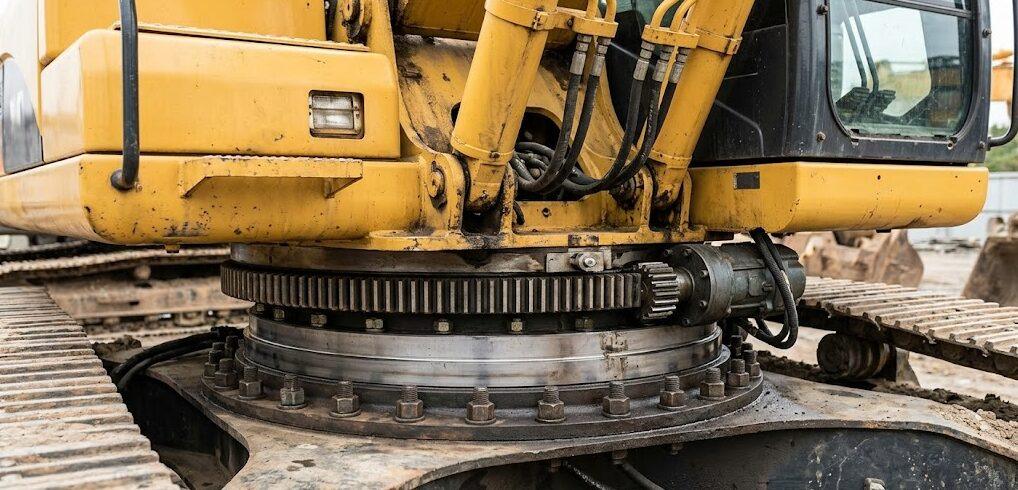
As the core transmission component, the application of slewing bearing covers almost all heavy industry industries:
- Construction machinery: Excavator slewing ring bearing bear frequent digging impact and slewing braking force.
- Lifting equipment: Slewing bearing crane and crane slewing bearing must ensure absolute safety when hoisting at high altitude.
- Wind power generation: yaw bearings and pitch bearings are usually bearings with high-performance slewing ring.
- Medical equipment: In CT machines, the cross roller slewing bearings provides silent, high-precision rotation support.
- Industrial automation: palletizing machines and rotary tables.
Selection Guide
Choosing the wrong slew ring bearing can lead to premature equipment failure or catastrophic accidents. Please observe the following selection list:
- Load analysis: Determine the static axial load, dynamic radial load, and maximum overturning moment.
- Safety factor: consider static safety factor (usually 1.25 – 1.5) and dynamic life requirements.
- Environmental factors: Is there salt spray corrosion? Is there extreme high or low temperature?
- Clearance requirements: What are the requirements for positioning accuracy for Axial Play and Radial Play?
- Reference brand: If the budget is sufficient and the pursuit of extreme reliability, rothe erde slewing bearing is often used as an industry benchmark for benchmarking.
Maintenance & Troubleshooting
Even for products made by top slewing bearing manufacturers, lack of maintenance can lead to rapid damage.
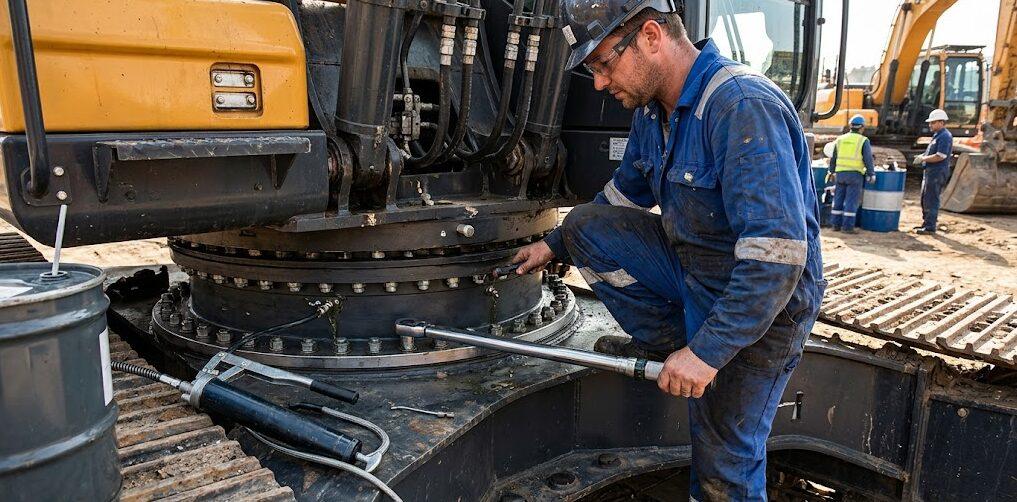
Lubrication management
Frequency: It is recommended to inject grease once every 100-200 hours of operation.
Grease selection: Use lithium grease with extreme pressure additive (EP).
Bolt inspection
The slewing bearing is fixed by high-strength bolts. The preload must be checked again after 100 hours of initial operation and every 500 hours thereafter. Loose bolts are the primary cause of bearing fracture.
common fault analysis
- Abnormal noise: Usually due to insufficient lubrication or foreign objects entering the track.
- Incorrect operation: Check whether the gear meshing gap (Backlash) is too small or whether there is track peeling.
- Excessive vibration: check the flatness (Flatness) of the support structure, uneven installation surface will cause deformation of the track.
FAQ
Q1: What is the main difference between Slewing bearing and plain bearing?
Slewing ring bearing can handle loads in 3 dimensions (axial, radial, moment) simultaneously, and usually have an integrated gear structure. The speed is usually low (<50 RPM), but the capacity is huge.
Q2: How to determine whether my equipment needs internal teeth or external teeth?
It depends on your space layout. The internal teeth are more compact and protect the gears from debris; the external teeth are easier to install the drive motor and perform routine maintenance.
Q3: Why is the cross roller slewing bearing more expensive than the ball type?
Because of its higher processing accuracy requirements, the contact area between the roller and the track is larger, the rigidity provided is stronger, and zero clearance can be achieved.
Q4: What certifications should you focus on when looking for slewing bearing manufacturer?
At least ISO 9001 quality certification. For specific industries, such as maritime, DNV or ABS certification is required; for wind power, a specific weather resistance test report is required.
Q5: What is the most common cause of premature failure of slew bearings?
According to statistics, 80% of the failures are due to improper lubrication, 15% are due to overload caused by uneven installation surface, and 5% are due to loose bolts.
Conclusion
Choosing the right slewing ring bearing is not only a reference to the sample manual, but also a rigorous engineering decision. From the microstructure of the material to the bolt preload during installation, every detail determines the life cycle of the equipment. If you are looking for a reliable slewing bearings suppliers, it is recommended to investigate its heat treatment process and load verification capability in depth.
[Contact our technical experts] | [View Slewing Bearing Product Series]
