 SWBTEC


Slewing Bearing Internal Gear In Heavy-Duty Machinery
Author:Iker Heras
Born in Barakaldo in 1986, he obtained the title of Industrial Engineer from the School of Engineering of Bilbao. After working as a researcher in the private company for four years (ITP and IK4-Ikerlan), he returned to his alma mater to do the doctoral studies.
Since then he is part of the ADM Group, where he works in the modeling of the structural behavior of machine components, being an expert in slewing bearings. He also works as a lecturer, lecturing in subjects related to the calculation and design of machines and the study of their components.
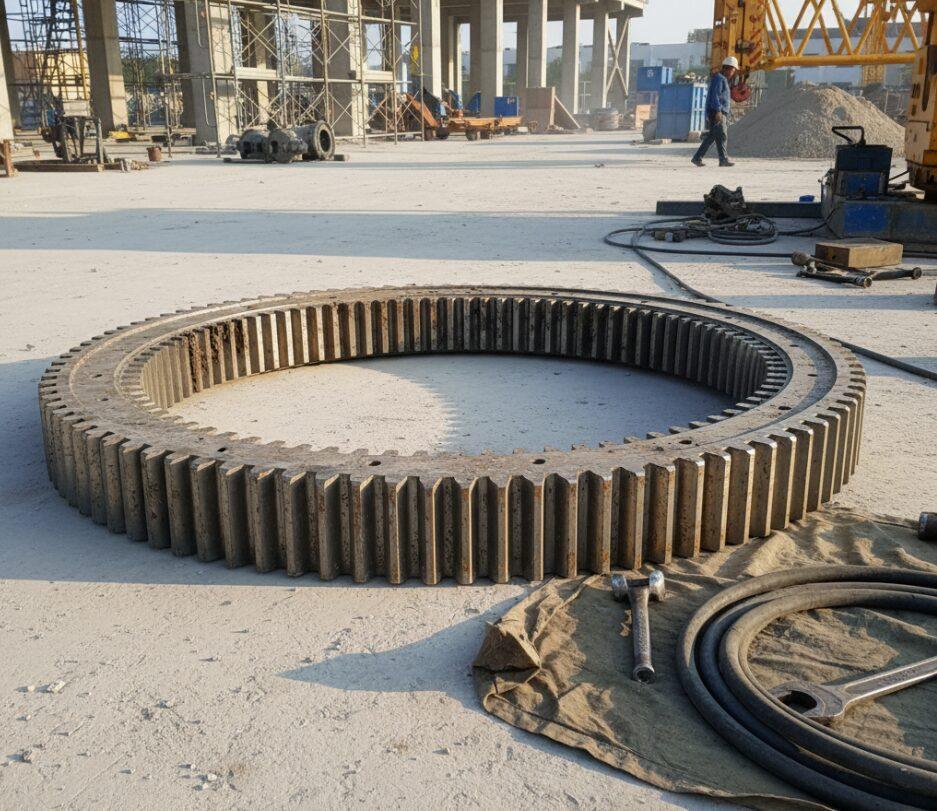
What Is A Slewing Bearing Internal Gear?
As we all know, slewing bearing is a key transmission component to realize rotation between two relative moving parts and to bear various loads (axial force, radial force, overturning moment). The “internal gear slewing bearing”, as the name implies, is that its ring gear is located inside the inner ring.
From the structural point of view, it is mainly composed of inner and outer rings, rolling elements (which can be steel balls or rollers), spacer holders, seals and the inner ring gear of the core. You may ask, what’s so special about this? The difference is this internal ring gear. When it meshes with the outer pinion gear, power input is achieved through the inner ring gear, thereby driving the rotation of the outer structure or machine.
Compared with the external tooth type slewing bearing, the biggest advantage of the internal tooth type design is that its structure is more compact. Imagine that if the ring gear is external, the external dimensions of the entire machine will increase by turns, which is a disaster for space-constrained designs. Although the structure of the toothless slewing bearing is more concise, it requires additional driving methods, such as friction drive, which is insufficient when precise synchronization and large torque transmission are required.
Therefore, the unique advantage of the internal gear slewing bearing is that it perfectly takes into account the carrying capacity and transmission function, and hides the driving mechanism inside the support, which greatly saves the installation space. This is particularly important in port machinery, engineering machinery, wind power and other fields.
Design Principle And Structural Advantages Of Internal Tooth Slewing Bearing
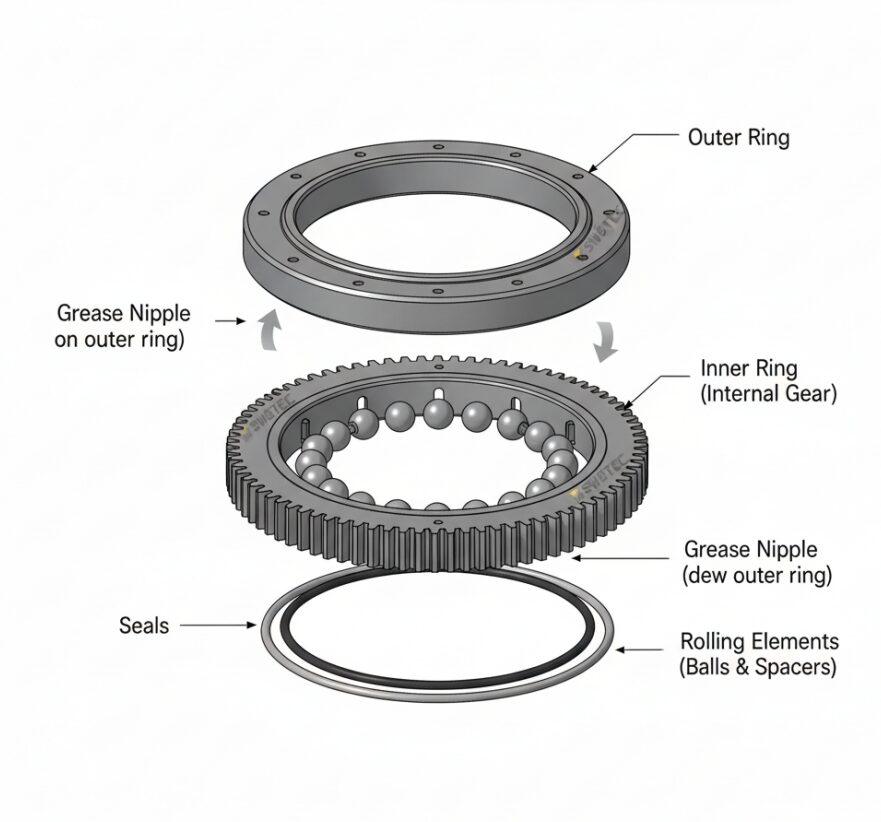
Core structure and working mechanism
In the many projects I have worked on, I have always been impressed by the core structure of the internal tooth slewing ring. In simple terms, it is like a big bearing, but not quite.
First, let’s talk about the type of rolling body. It usually uses balls or rollers as rolling bodies. The ball slewing bearing performs well in the occasions with light or medium load and certain requirements for speed. Its point contact characteristics make the friction relatively small, but the carrying capacity will be limited. The roller type, whether it is a cylindrical roller or a cross roller, due to the line contact, its load-carrying capacity is much higher than that of the ball type, especially suitable for those applications that need to withstand huge radial and axial loads.
I personally prefer to choose cross rollers in heavy construction machinery, because they can withstand multi-directional loads at the same time, and can provide higher rigidity.
Material selection is another aspect that makes me deliberate. Inner and outer ring material, we usually choose such as 42CrMo or 50Mn high strength alloy steel. Because of its excellent comprehensive mechanical properties and good hardenability, 42CrMo performs well under heavy load and impact conditions. And 50Mn has its unique in terms of hardness and wear resistance. After the material is selected, the next heat treatment process is very important. Quenching and tempering can significantly improve the hardness and wear resistance of the surface, while ensuring sufficient toughness of the core to avoid brittle fracture.
I have encountered a case, is because the heat treatment parameters are not properly controlled, resulting in early failure, so this piece can not tolerate the slightest sloppy.
Finally, the seal design. This is like the “skin” of the slewing bearing, especially in the harsh working environment that engineering machinery often faces, such as dusty, humid and even corrosive media. Labyrinth seals rely on multi-layer gaps to hinder the entry of contaminants through non-contact methods, and are suitable for high-speed or friction-sensitive applications.
The contact seal, such as lip seal, the sealing effect is more reliable, can effectively prevent grease leakage and external pollutants intrusion, although the friction will be slightly increased, but in my opinion, for the protection of bearing life, this sacrifice is completely worth it.
Unique advantages of internal ring gear
The reason why I think that the internal toothed slewing bearing is an ingenious design stems largely from the multiple advantages that come with its internal ring gear.
Space utilization: that is my primary consideration. The ring gear is designed on the inside of the slewing bearing, making the entire transmission mechanism more compact. Imagine that if the ring gear were on the outside, the overall dimensions of the entire device would be one turn larger, which would undoubtedly add insult to injury for a space-constrained mechanical design. The internal ring gear perfectly solves this pain point, achieving a compact transmission in a limited space.
Gear protection: The external gear is susceptible to damage from sand, dust, stones or even accidental impact, while the internal gear is cleverly “hidden” inside the structure and less susceptible to contamination and physical damage from the external environment. This greatly extends the life of the gear and reduces the frequency of maintenance, which is an obvious advantage from the point of view of maintenance costs.
Transmission accuracy: in my opinion, transmission accuracy is a core indicator for evaluating any gear train. The machining accuracy of the internal gear directly affects the smoothness of the rotation and the final positioning accuracy. High-precision internal gears can effectively reduce transmission clearance and reduce vibration and noise, which is crucial for some equipment that requires precise control, such as aerial work platforms or precision cranes.
Load-bearing capacity: The integrated design of gears and bearings is not a simple stacking, but an optimization of the structure. This integration allows the load to be more evenly distributed over the entire structure, which elevates the overall structural strength and load-bearing capacity.
Common Gear Parameters and Geometric Design Considerations
When designing the internal ring gear, I always carefully consider the principle of selecting basic parameters such as modulus, number of teeth, pressure angle, etc. Modulus determines the size and bearing capacity of the gear, the number of teeth is closely related to the transmission ratio, and the pressure angle affects the meshing performance and tooth root strength of the gear. These parameters do not exist in isolation, they are interrelated and need to be comprehensively optimized under the premise of meeting the constraints of strength, stiffness and space.
In addition, tooth shape modification and displacement design are “advanced skills” to improve gear performance “. Through reasonable tooth shape correction, the meshing impact of the gear can be improved, the noise can be reduced, and the service life can be prolonged.
The displacement design can adjust the strength and wear resistance of the gear without changing the center distance, or avoid undercutting, and optimize the meshing performance and transmission stability of the gear. I usually use professional gear design software for simulation analysis to ensure that these corrections and changes can achieve the desired effect.
Case Analysis Of Application Of Internal Tooth Slewing Bearing In Practical Engineering
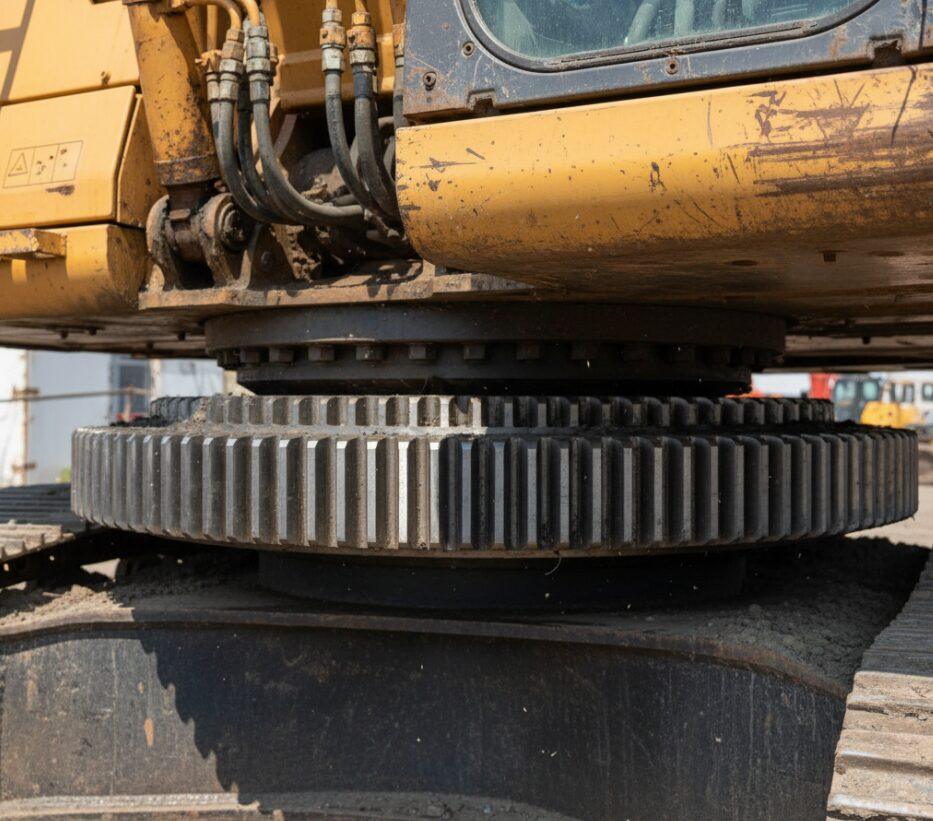
Construction Machinery
In the field of construction machinery, internal toothed slewing bearings are almost indispensable “joints” for heavy equipment such as excavators and cranes “. I remember one time when our team was designing a large excavator, the biggest challenge was how to keep the slewing mechanism reliable under frequent start and stop and high impact loads. After all, the excavator bucket one dig one unload, the impact of the moment is huge.
The design advantages of the internal gear slewing ring are reflected at this time: the ring gear is located inside, which can be better protected, reducing the wear and damage of the external environment, and the internal gear can achieve a greater transmission ratio, making the drive Torque is transmitted more efficiently. In order to cope with high impact loads, we usually use ring gears and raceways that have undergone special heat treatment and surface strengthening processes, and carefully calculate the fatigue life and ultimate load of the bearings during design.
Frequent start and stop puts forward higher requirements for the lubrication system, so we will also focus on the selection of grease and the design of the sealing structure to ensure that the lubrication can be in place even under intermittent work.
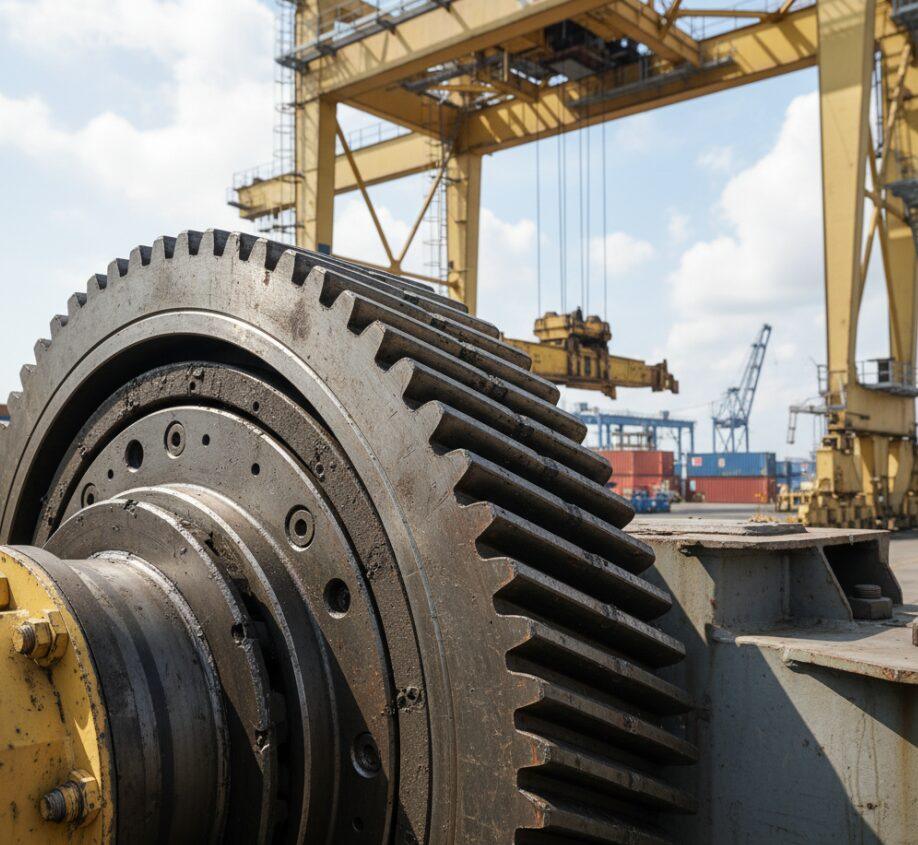
Port Machinery and Wind Power Equipment
Port machinery, such as those huge quayside container cranes and wind power generation equipment standing by the sea, are undoubtedly in a harsh working environment. I have been involved in a port crane project, the biggest headache is the corrosion caused by the marine environment. Salty and humid air, sea breeze erosion, these tests on metal parts are continuous and severe.
Therefore, in these applications, the anti-corrosion design of the internal tooth slewing bearing is the most important. We will choose materials with better corrosion resistance, such as stainless steel or alloy steel with special surface coating, and the sealing structure must also be extreme to prevent seawater and salt spray from invading the bearing.
In addition, the slewing bearing of wind power generation equipment also needs to bear the complex alternating stress caused by wind load, which requires the support to have excellent fatigue resistance. During the design phase, extensive finite element analysis and fatigue testing are performed to ensure that the support remains stable over a period of several decades.
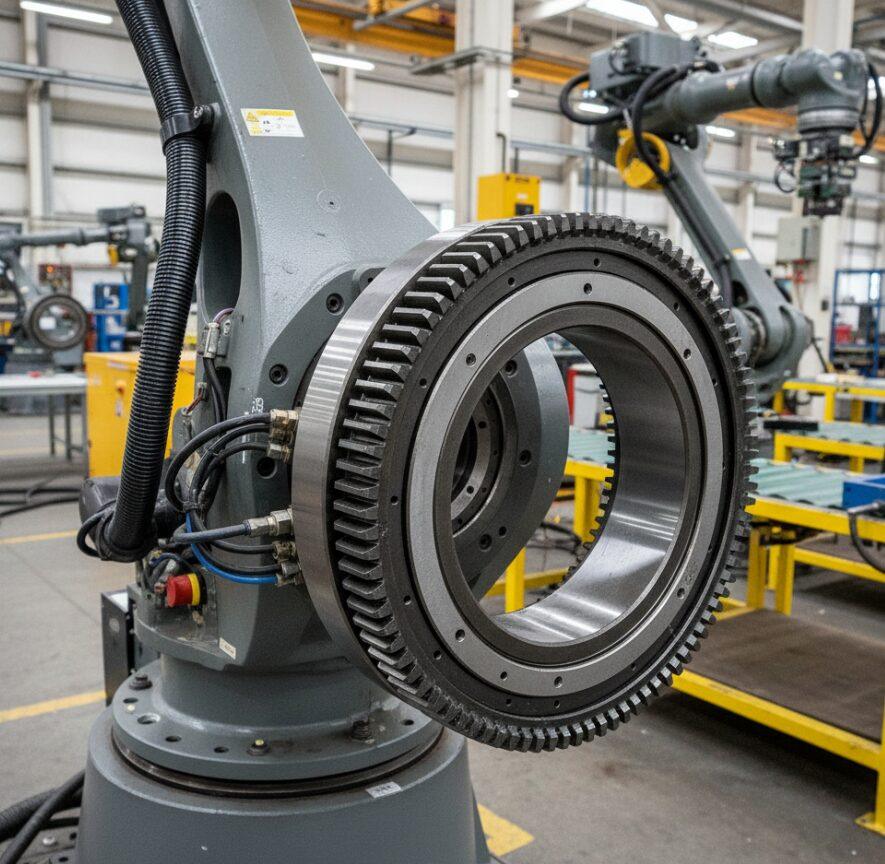
Solar tracking system and industrial robot
When it comes to positioning accuracy and long-term maintenance-free, solar tracking systems and industrial robots are two typical application scenarios. I personally feel that these two areas of the slewing ring requirements more refined. Solar panels need to accurately track the sun around the clock, and even the slightest angular deviation can affect power generation efficiency.
This means that the rotation accuracy of the slewing bearing must be very high, and this accuracy must be maintained for a long time. We usually use pre-tightening design to reduce the gap, and choose high-precision rolling elements and raceway processing technology.
Similarly, industrial robots have extremely high requirements for repetitive positioning accuracy, and they need to perform every action accurately. In these cases, the friction torque stability, stiffness and long-term operation of the slewing bearing maintenance free characteristics are the key considerations. Reducing maintenance can significantly reduce operating costs, which is especially important in automated production lines. Therefore, we will give priority to the sealed slewing bearing with self-lubricating function or long-life grease, and extend its service life by optimizing the structural design.
