
 SWBTEC


Excavator Swing Bearing Failure
Excavator swing bearing failure is typically identified by distinct “clicking” or “grinding” noises from the slewing ring, accompanied by significant wobbling (excessive play) of the upper structure during rotation. If your grease contains shiny metal fragments or you see a visible gap between the cab and chassis, the internal raceways are likely damaged. This failure is often caused by long-term lubrication contamination, seal aging, or overload fatigue. Stop all operations immediately to prevent ring gear fracture or safety accidents, and perform a wobble test or bolt inspection before contacting a professional for replacement.
Listen To The Sound And Watch The Movement
If there is a problem with the slewing bearing, the machine will usually “tell” you first. The most direct is the voice. Everyone knows the sound of normal operation, but if you hear a clear “click” or a harsh grinding sound, it is definitely wrong. This usually means that the internal balls or rollers are rolling over the damage points on the raceway, and it may even be that the teeth of the ring gear are broken.
Visual cues are equally important. You may notice a noticeable shake on the upper body, which is known as “excessive volume”. Especially when the load changes, you can clearly feel the upper body shaking relative to the chassis. I have seen serious situations, and there is even a clear gap between the cab and the chassis. This indicates that the connecting bolts may have been elongated, or the bearing structure may have been physically separated. At this time, if you still dare to work, the cab is at risk of falling off.
Open The Grease To See Internal Injuries
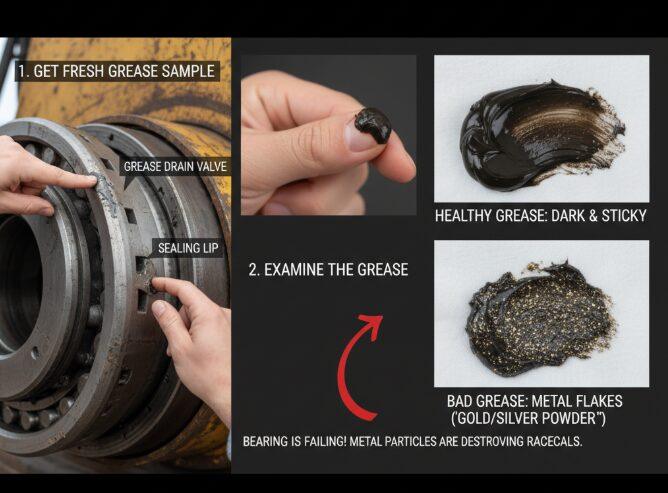
Want to completely before the nest to confirm whether the slewing bearing is waste, the most effective way is to check the grease. When the internal raceway begins to flake or pimples due to fatigue, tiny metal particles are mixed into the butter.
When discharging waste oil, stare big eyes carefully. If you see shiny metal fragments, or the kind of glitter-like “sequins”, this is hard evidence-the hardened surface of the bearing is disintegrating. If the grease color is gray or metallic instead of the original grease color, it means that the internal wear is quite serious and the bearing is basically scrapped.
Root Cause Analysis
Only when we find out why it is bad can we prevent it later. There are 3 main culprits leading to the failure of the slewing bearing:
Lubrication pollution: soil, water and sand are the enemies of the slewing ring. Once these dirty things are mixed into the raceway, they become abrasives, grinding the bearing surface a little bit.
Seal aging: rubber sealing strip is the line of defense. Over time, the sealing strip will age, crack or even fail, the oil inside will leak out, and the dust outside will drill in, a vicious circle.
Overload fatigue: always hoisting things that exceed the rated load, or using the turning action to sweep the heavy object sideways (lateral load), which will cause great stress concentration. This “overwork” will cause the ring gear to break or the raceway to collapse directly.
Clearance Test And Bolt Inspection
If you suspect there is a problem, don’t make a wild guess and do the diagnosis immediately:
Wobble Test: Stop the excavator on the flat ground. Extend the big arm and rest the bucket on the ground. Use the hydraulic system to apply a little downforce and lift the track a little bit. At this time, use the dial indicator to measure the vertical movement (clearance) between the bearing outer ring and the inner ring. Compare the measured data with the wear limit value given by the manufacturer to see if it exceeds the standard.
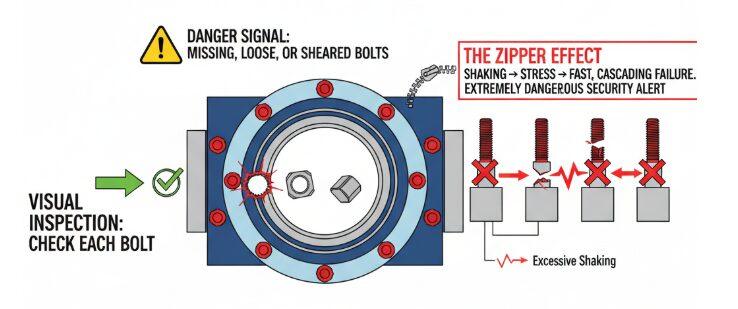
Bolt inspection: Get down and look at the mounting bolts that connect the bearing, chassis and upper body. Focus on whether there are signs of broken ends, loose gaskets, or elongated bolts. Under normal circumstances, a failure of the bearing because the shaking is too large, often the first to cut the mounting bolts.
Stop The Machine And Change Parts
Once the symptoms are diagnosed, the most critical advice is only one: stop all operations immediately. Ignoring the damage of the slewing bearing is not only a maintenance problem, it is a serious safety hazard. Continued operation will cause the ring gear to break completely, and the upper body may lose control, or even separate directly from the chassis.
As long as the fault is confirmed by gap test or butter analysis, this part cannot be repaired and can only be replaced. Considering the high precision required to replace this thing, coupled with the dead weight of the car body, it is necessary to contact a professional maintenance team to do it. Only in this way can we ensure that the new bearing is installed in place and the bolt torque meets the standard.
Author: Dylan
“I am a heavy equipment specialist with over a decade of field experience in excavator maintenance. My focus is on diagnosing critical component failures—like slewing rings—to help operators identify warning signs early, prevent costly breakdowns, and ensure site safety.”
