 SWBTEC


Slewing Bearing For Excavator
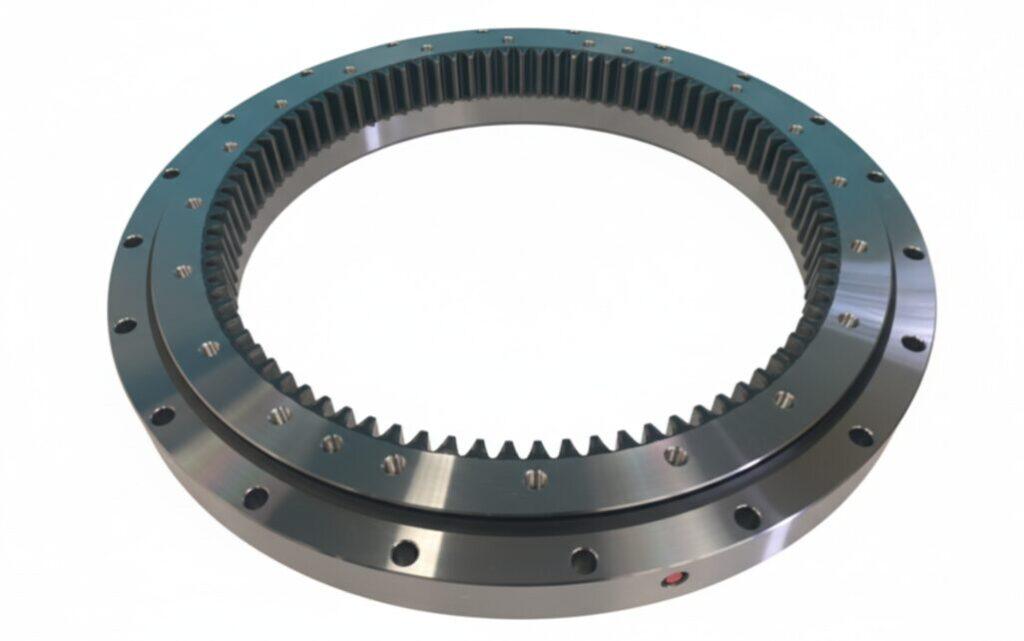
The slewing bearing of the excavator is the most critical connecting part of the whole machine. It connects the rotating superstructure (cab, boom) of the excavator with the stationary chassis, not only to ensure 360-degree smooth rotation without dead corners, but also has to withstand huge axial force, radial force and tipping moment. Structurally, it is like a giant rolling bearing with a ring gear, which is filled with balls or rollers to reduce friction, and the outside is blocked by seals to keep dirt out. Although this thing is strong, if you hear the abnormal sound of grinding iron, or if you find that the gap is getting bigger and there are iron filings in the grease, you have to be on guard-this is it asking for help.
Core Functional And Structural Components
To really understand the impact of the slewing bearing on the performance of the excavator, we have to take it apart and crush it. Many people just think of it as a connector, but in fact it is an extremely complex load-bearing system.
1. The core of rotation and stability
Its first task is to act as a “joint”, connecting the upper car with the engine, cab and big arm with the walking mechanism (track or wheel) at the bottom. It allows the car to freely do 360-degree continuous rotation. Without this smooth rotation, the excavator would not be able to dig, lift and unload efficiently, basically wasting half of its martial arts.
2. Withstanding Three Extreme Load Conditions
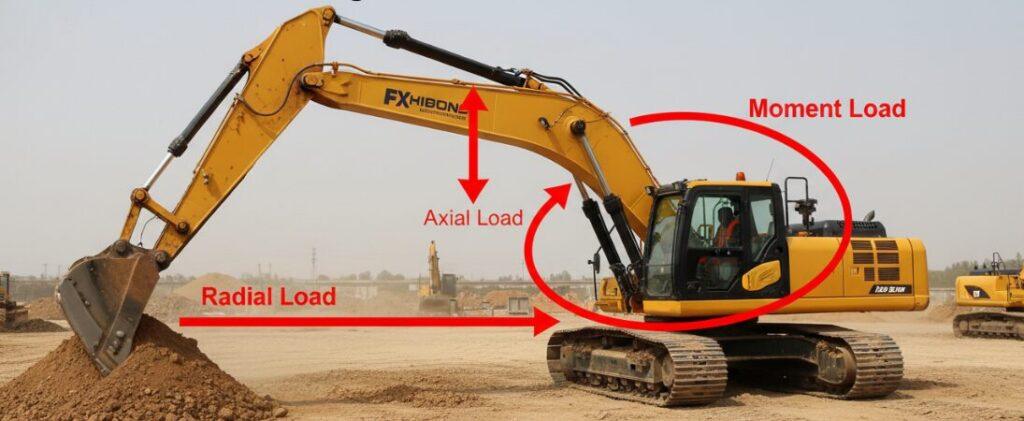
Excavators perform heavy-duty work, and the slewing bearing must simultaneously handle three major challenges. This is where the product design is most rigorously tested:
Axial loads: Simply put, the vertical downward pressure comes from the total weight of the material in the cab, boom, stick and bucket.
Radial Loads: This is the horizontal force, which usually occurs when the machine rotates to accelerate, decelerate or push the earth sideways.
Moment Loads: This is the most dangerous force. When the big arm is fully extended to dig heavy objects, it is like a lever to “pry over” the machine. At this time, it is all held by the slewing bearing.
3. Integrated gear design
Structurally, it consists of an inner ring and an outer ring. The key is that the gear teeth are usually machined directly on one of the rings. These teeth are designed to directly mesh with the pinion of the rotary motor, through which hydraulic power is converted into rotational force to drive the heavy car to rotate.
4. Friction reduction and protection
Between the inner and outer rings are rolling bodies-steel balls or cylindrical rollers. Their presence greatly reduces friction and allows loads of several tons to turn silky smoothly. In addition, I must emphasize the importance of seals. High-quality sealing is not only to lock the grease, but more importantly to keep the dust, water and debris on the site out. Once the seal fails, the internal raceway will soon be scrapped.
Working Principle Of Excavator Slewing Bearing
The work of the slewing bearing is actually a precision fit between the drive system and the bearing structure. The process is roughly like this: the operator pushes the rotary handle, and the hydraulic rotary motor of the excavator starts to turn the pinion. This pinion engages the ring gear on the slewing bearing (some in the inner ring and some in the outer ring depending on the model). As the motor forces, the inner and outer rings rotate relative to each other on the rolling elements. This mechanism converts the torque of the motor into a rotary motion of the entire superstructure. The key here lies in the rolling elements, which ensure the precision and low friction of the movement, so that when the operator does fine work (such as hoisting pipes or fine leveling), he can stop where he points and does not slide over his head.
Fault Indications And Maintenance Best Practices
Since doing the most tiring work, wear and tear is inevitable. Identifying early warning signals and strictly implementing maintenance is saving money and saving life.
Identify alarm signals
The mechanic and the repairman must keep his ears and eyes open at all times:
Listen to the sound: If you hear a “creak”, crack or click when rotating, don’t hesitate, the rolling body or raceway is probably injured.
Abnormal action: if there is “stuck” (feel stuck when turning to a certain angle) or abnormal vibration, it means there is internal damage.
Play: This is a very intuitive signal. If you find that there is an obvious “shaking” feeling on the chassis of the car, just like a seesaw, it means that the internal clearance has exceeded the safety limit.
Lubrication and inspection are life-saving symbols.
Grease is the first line of defense, but the old oil discharged is actually the best “medical report”.
Check for contaminants: Take a closer look as you squeeze out old butter. If you find metal particles or flakes, it means that the raceway or roller has begun to peel off, which is hard evidence of severe wear.
Periodic Inspection: Routine inspection must include seals. A broken seal will allow water and soil to mix into the butter, which when mixed together is a strong abrasive paste that will grind the bearing from the inside.
When should I change
Maintenance can last life, but it can’t save hard injuries. If the bearing clearance exceeds the manufacturer’s scrap standard, or the new oil is still ringing, the slewing bearing must be replaced immediately. Don’t take any chances. It is a great safety hazard to continue to use a failed bearing-under heavy load conditions, the upper structure may even fall off the chassis directly, which is really fatal.
Author:Alex Morgan
I’m a heavy machinery components specialist with over a decade of experience in the construction equipment industry. My expertise focuses on the structural integrity and maintenance of excavator undercarriage parts, specifically slewing bearings. Through my articles, I aim to help operators and fleet managers understand critical failure signs and maintenance protocols to maximize machine uptime and safety.
