
 SWBTEC


Customized Black Electroplating Slewing Bearing: 2026 Wholesale
In 2026, the purchase of large-scale customized black electroplating slewing bearing (customized blackening electroplating slewing ring) must 3 a hard target: a trivalent chromium (Cr3) process conforming to RoHS standard, a strict hydrogen removal record after plating, and a flexible and expandable bottom supply chain. Continued use of the old surface treatment parameters is bound to lead to salt spray testing and customs seizure. Now regional wholesalers and mechanical design engineers are facing a fatal information gap. Heavy slewing bearings suddenly break or even break teeth under harsh working conditions. The root cause is often not that the raw steel material is too poor. The real culprit is hidden in the outdated electroplating process. We directly dismantle the process black box of the existing factory and sort out a set of hard core pit avoidance guidelines for your next batch of supply plans.
Deadly trap: hydrogen embrittlement fracture mechanism of slewing bearings
The absence of post-plating bake hydrogen removal process will directly lead to catastrophic micro-cracks in the highly loaded slewing bearing. The plating process inevitably infiltrates free hydrogen atoms into the steel lattice. If the heat treatment is not carried out immediately, these hydrogen atoms will gather in the root and raceway of the stress concentration, and completely destroy the structural strength of 42CrMo4 high carbon steel.
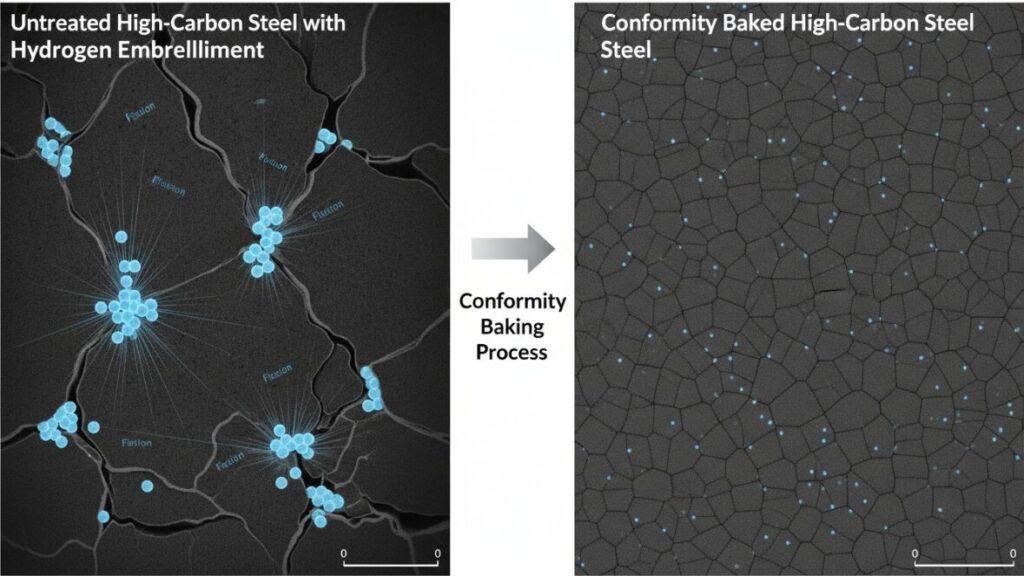
The death rule of a large factory in the first line is that within 4 hours after electroplating is offline, forced hydrogen exhaust baking at 200 ℃ or above must be carried out. This thermodynamic intervention can force hydrogen out of high-strength parts. Before signing any black electroplating slewing bearing supply (blackening electroplating slewing bearing supply) contract, the purchasing manager must require the manufacturer to provide detailed oven temperature curve and entry and exit records. Looking at the blackened gloss of the surface, it is impossible to find out whether the internal substrate has become brittle. What you need is real heat treatment data from the first line of the workshop to save your life.
2026 export compliance threshold: Cr6 process with Cr3
In 2026, the European and American environmental protection regulations directly sentenced the death penalty of hexavalent chromium (Cr6) blackening electroplating in international trade. The mandatory update of EU REACH regulations and the US EPA’s restriction order have already landed. Once heavy equipment with toxic Cr6 surface treatment is found, it will face sky-high fines and return of the whole cabinet.
The upgraded trivalent chromium (Cr3) blackening plating can not only make a completely consistent dense matte black appearance, but also can not produce white rust for more than 500 hours in the neutral salt spray test (NSS). This environmentally friendly coating completely eliminates customs compliance risks for export machinery. Engineers who design offshore cranes or solar tracking brackets can now only keep an eye on the Cr3 coating, because this is the only solution that does not drop the chain in a high salt spray corrosive environment and conforms to international environmental protection laws.
Trivalent (Cr3+) vs. Hexavalent (Cr6+) Electroplating Core Parameters Comparison
| Core Parameter | Trivalent Chromium (Cr3+) | Hexavalent Chromium (Cr6+) |
| Chemical Toxicity Level | Low Toxicity / Non-carcinogenic Environmentally friendly, safe for operators, and does not pose severe health risks. | Highly Toxic / Class 1 Carcinogen Extremely hazardous, mutagenic, and poses severe occupational health and environmental risks. |
| Neutral Salt Spray (NSS) Limit Duration | Up to 480 – 1000 hours Excellent corrosion resistance, but typically requires high-quality sealers or topcoats to reach maximum limits; lacks self-healing properties. | 500 – 1000+ hours Traditional gold standard for anti-corrosion. Provides a natural, bare-metal protective layer with active “self-healing” properties. |
| 2026 EU/US Customs Compliance Status | 100% Compliant (Green Light) Fully compliant with EU REACH, RoHS, ELV, US EPA, and passes all global customs seamlessly. | Highly Restricted / Banned (Red Light) Subject to intense EU REACH restrictions and blocked by RoHS/ELV. Faces active phase-outs in the US (e.g., California CARB bans starting in 2026/2027). High risk of customs seizure. |
| Cost Fluctuation Ratio per Ton | +20% to +50% Net Increase Raw chemical costs are 2x-3x higher than Cr6+. However, this initial spike is partially offset by significantly lower wastewater treatment and compliance costs. | Baseline Cost (0%) Chemical liquids are extremely cheap. However, hidden costs are surging due to astronomical wastewater disposal, exhaust ventilation, and regulatory penalty risks. |
C- T-L Bulk Purchase Matrix for Regional Wholesalers
To maximize profits and cut dead inventory, regional wholesalers must understand the C- T-L (coating-torque-delivery) dynamic purchasing matrix. Those black electroplating slewing bearing wholesalers (wholesalers of blackened electroplating slewing bearings) who stock agricultural machinery or port machinery all the year round are settling accounts every day: deep customization of gear parameters will lengthen the delivery period, while conventional whiteboard currency cannot withstand the strict rust prevention requirements of customers.
The solution of C- T-L matrix is very violent: the forging blank is completely standardized, and all the customization energy is put back to the stage of finishing, electroplating and gear cutting.
Coating thickness: It is mandatory to use a Cr3 + standard blackening layer of 15-20 microns for 80% of the conventional stock. The limit thickness above 25 microns and the secondary sealing process are directly left to the customized list of marine engineering level.
Torque parameters: centralized procurement of large and medium-sized internal tooth structure models. This batch of models can eat the torque demand of most medium-sized excavators and automatic turntables of aerial work platforms on the market.
Lead time: Only those source manufacturers that have forged blanks under 1000mm all the year round should cooperate. When the factory gets the blank, it directly completes turning locally and goes to the production line to do customized black electroplating slewing bearing surface treatment, which can break the original 45-day delivery time to less than 18 days.
Hard Core Measurements: 600 Hours of Coastline Exposure Data
Our engineers directly pulled the customized high-density blackening electroplating rotary drive and traditional blackening treatment (Black Oxide) bearings to the harbor wharf and put them together for extreme anti-corrosion exposure testing. The assessment index is extremely straightforward: see who can keep rotating smoothly after continuous high concentration salt spray erosion.
The traditional blackening treatment completely collapsed on the 14th day, with serious pitting on the raceway and severe corrosion on the tooth surface. However, the customized blackened electroplating slewing bearing still maintains the initial starting torque after breaking through the 600-hour mark. The electroplated zinc-nickel alloy layer acts as a sacrificial anode here, blocking the red rust and not letting it touch the 42CrMo4 substrate even 1mm. As long as the surface treatment in the drawing is changed to this specific parameter, the heavy machine purchasing department can help the end customer cut off more than 60% of the downtime maintenance cost under strong corrosion conditions.
FAQ
What is the minimum coating thickness of the customized blackening electroplating slewing bearing?
The red line for industrial base protection is 12 to 15 microns. For marine equipment and high corrosion environments, coatings with a thickness of more than 20 microns must be customized and a silicate secondary sealing layer must be imposed.
Why does the current slewing bearing wholesaler have to specify Cr3 + process?
For absolute compliance. Cr3 + (trivalent chromium) fully complies with the extremely stringent RoHS and REACH environmental protection red lines worldwide in 2026. It can ensure that the whole machine equipment will not be stuck when passing through customs, and at the same time, the anti-corrosion performance is completely benchmarked or even surpasses the banned Cr6 + coating.
Will the thickness of the electroplated layer change the gear meshing tolerance of the slewing bearing?
The thickness of the electroplated layer in the top factory is extremely uniform (usually controlled within 20 microns error). Before cutting teeth on the CNC lathe, the process engineer will calculate the micron-level allowance into the processing program in advance, and the flank clearance and meshing tolerance of the finished product will not move.
Can I directly purchase blackened electroplated bearings with internal tooth structure?
Absolutely no problem. Professional manufacturers will use special customized tooling to shield the inner ring raceway and specific non-working faces before electroplating into the pool, or carry out full-film electroplating according to the friction coefficient requirements marked on your drawings.
When purchasing and supplying in large quantities, what means does the factory rely on to prevent hydrogen embrittlement fracture?
Keep an eye on the hydrogen removal process. Reliable manufacturers will push all electroplated parts into a constant temperature oven above 200 ℃ for continuous baking for more than 4 hours within 4 hours after they are offline. This is the only technical means to forcibly extract the residual hydrogen atoms inside the high carbon steel and prevent microcracks.
How long does it take for the normal delivery of the wholesale custom slewing ring?
As long as the supplier adopts modular production (forging blanks are stored in the warehouse all the year round), the delivery period can be compressed within 18 to 25 days from single cutting to blackening and electroplating. If it is a non-standard size that needs to be re-opened for forging, the delivery period will start in 40 to 50 days.
What is the fundamental difference between blackening plating and spraying antirust paint for slewing bearings?
Electroplating is a chemical bond at
