 SWBTEC


Excavator Swing Bearing
what is the excavator slewing ring bearing
function and its principle
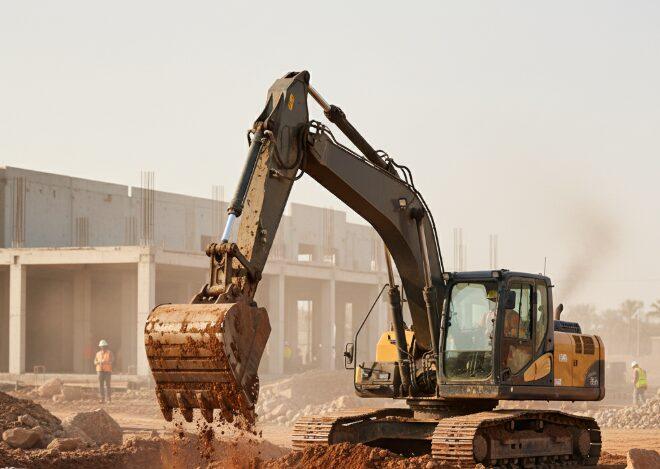
Excavator slewing bearing is a key component that connects the upper body (cab, engine, etc.) and the lower body (chassis, crawler, etc.) of the excavator.
Its core function is to support the weight of the upper structure and transfer the huge impact load generated during excavation, while ensuring that the upper structure can rotate smoothly and accurately, so as to realize various operations such as excavation, loading, and unloading.
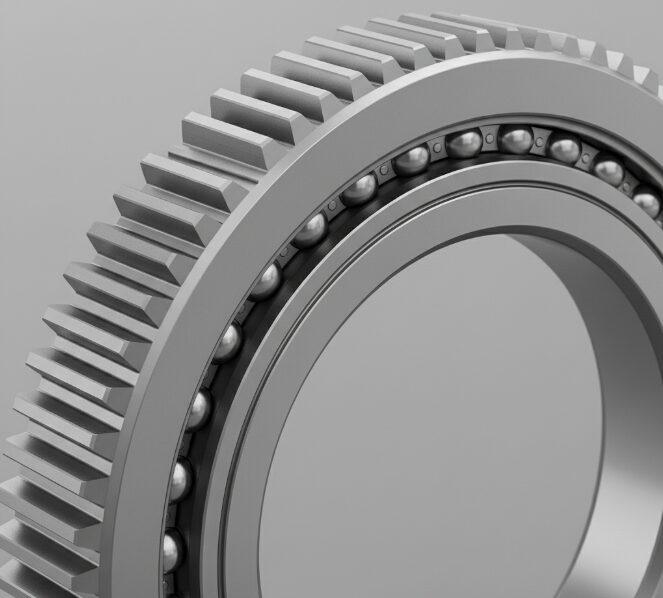
The bearing consists of two inner and outer rings, and the ball or roller is filled between the rings. When the body of the excavator rotates, the balls or rollers will roll between the ferrules to achieve smooth rotation.
At the same time, in order to bear the huge radial force, axial force and overturning moment, the slewing bearing will also be designed with gears, which mesh with the gears of the drive motor to provide rotational power.
Main types of classification
- Four-point contact ball slewing bearing: This is the most commonly used 1 type, with relatively simple structure and moderate load capacity, suitable for small and medium-sized excavators.
- Double row of different diameter ball slewing bearings: bearing capacity is stronger than the four point contact ball type, can withstand greater axial force and overturning moment, and is mostly used in medium and large excavators.
- Cross roller slewing bearing: it is characterized by roller cross arrangement, bearing capacity is very high, good rigidity, suitable for heavy load, high precision requirements of the occasion.
- Three-row roller slewing bearings: the strongest carrying capacity, the most complex structure, mainly used for super large excavators.
core parameters
Size Specification
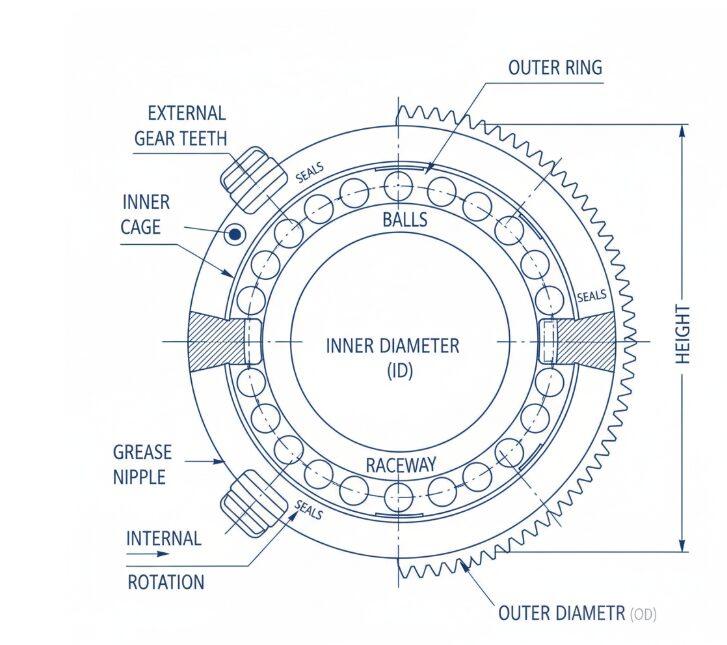
- Inner diameter (d): refers to the diameter of the bearing inner ring.
- Outer diameter (D): Refers to the diameter of the bearing outer ring.
- Height (H): refers to the total height of the bearing.
- Number and size of mounting holes: the number, diameter and distribution of bolt holes on the inner and outer rings for fixing the bearing.
- Gear modulus (m) and number of teeth (Z): For toothed bearings, these two parameters determine the engagement with the drive pinion.
Gear Type
External tooth type:
- Features: The ring gear is located outside the bearing and meshes with the external drive gear. The structure is relatively simple and easy to manufacture and install.
- Applicable scenarios: The vast majority of small and medium-sized excavators and some large excavators use external teeth, which is currently the most common type on the market.
Internal tooth type:
- Features: The ring gear is located inside the bearing and meshes with the internal drive gear. It can effectively protect the gear and avoid external foreign body damage.
- Applicable scenarios: mainly used for some special requirements for gear protection, or space structure has a unique design of the excavator. There are also applications in some non-excavating machinery such as cranes.
Toothless:
- Features: The bearing itself has no gears. It needs to be driven by external friction wheels or other non-gear transmission.
- Applicable scenarios: Less used for excavators, but in some large equipment, such as shield machines, wind turbines, etc., in order to achieve a more stable or special rotation mode may be used.
material
- Raceway material: usually high carbon chromium bearing steel (such as GCr15), after quenching and tempering treatment, so as to obtain high hardness and excellent wear resistance.
- Gear ring material: usually high-quality alloy structural steel (such as 42CrMo), also need to be quenched and tempered and surface quenching treatment, to ensure that the teeth have sufficient hardness and strength, while maintaining the core toughness, resistance to impact load.
- Cage material: common nylon, brass or steel stamping parts. Nylon cages are self-lubricating and have low noise; brass and steel cages have higher strength and are suitable for heavy loads.
The combination of high carbon chromium bearing steel and alloy structural steel is sufficient to cope with the vast majority of excavator operations.
For excavators working in extremely cold, extremely hot, high corrosion or very high impact loads, special heat treatment processes or higher grade alloy steel may be required to ensure its performance and reliability.
accuracy
Geometric accuracy: usually follows ISO (International Organization for Standardization) standards. In the ISO system, the accuracy levels from low to high include P0, P6, P5, P4, and P2.
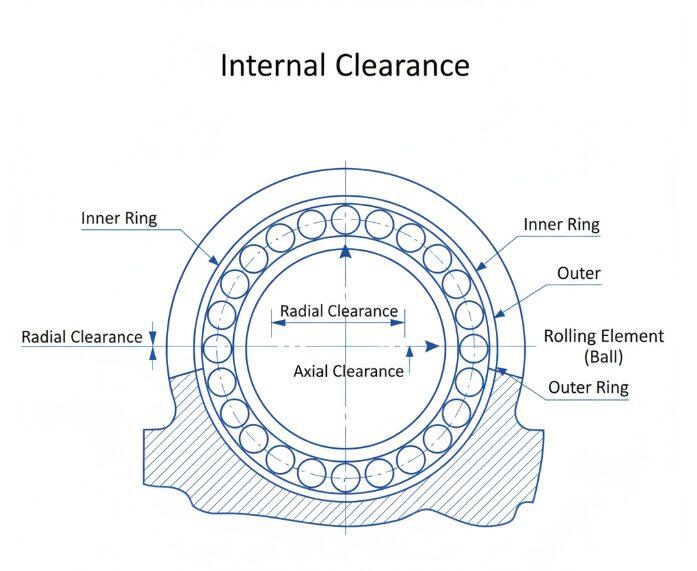
Play: The internal play (radial and axial play) of the bearing is also a key accuracy-related parameter. Excessive play may lead to unstable operation and increased vibration; too little play may lead to excessive preload, increased friction, excessive temperature rise, and even jamming. The groups of play according to international standards are arranged from smallest to largest as C2, C0/CN, C3, C4, and C5.
Commonly used excavators: Most excavators use P0 or P6 accuracy grade for slewing bearings, and C2 or C0 grade for play is sufficient to meet the needs of daily earthmoving, loading and other operations, and strike a good balance between performance and cost.
High-precision or special working equipment: For equipment that requires high-precision positioning and has extremely high requirements for smoothness or noise, bearings with P5 or higher accuracy may be selected.
excavator slew ring procurement guide
How to choose the right model
- Confirm the model of the device: this is the most basic and crucial step. Different models of excavators may have completely different sizes and parameters of slewing bearings.
- Consult the original parts manual: If there is an original parts manual, then you can check the relevant parts model, which is the most reliable reference basis.
- Measuring old bearing dimensions: If a manual is not available, detailed measurements of the old bearing can be made, including inner diameter, outer diameter, height, mounting hole distance, gear parameters, etc.
- Consult a professional supplier: If choosing a model on your own will be difficult, then you can inform the professional supplier of your needs and equipment information, and the staff will recommend the best matching model for you based on experience and database.
slewing ring quality assessment
Quality Certification
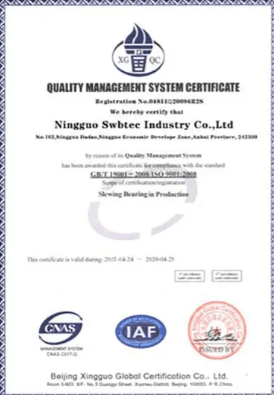
ISO 9001 (Quality Management System Certification): This is the most basic and important certification. It shows that the manufacturer’s entire quality management system complies with international standards, with strict quality control processes from raw material procurement to production, testing, sales, and after-sales service.
CE certification (Conformité Européenne – European Conformity Certification): CE certification is mandatory if the product is sold to the EU market. It indicates that the product complies with the EU’s safety, health and environmental protection directives.
The above relevant certificates can be found in the quality inspection report, quality certification documents, instructions and official website of the slewing bearing manufacturer that comes with the product.
Appearance inspection
- Surface finish: bearing inner and outer rings, tooth surface should be smooth and smooth, no obvious burrs, scratches, pits or cracks.
- Corrosion: The bearing should be well protected during storage and transportation, and the surface should not have any rust, especially the raceway and tooth surface.
- Machining accuracy: The tooth profile of the gear should be regular and full, without chipping or missing teeth. The edges of the mounting holes shall be smooth and free from flash or blockage.
- The seal is intact: the seal ring of the bearing should be intact and installed in place without aging, cracking or deformation. If the seal is not good, it will lead to the loss of grease and the entry of pollutants, which will seriously affect the life of the bearing.
- Clear identification: on the bearing body or packaging, the manufacturer’s brand, model, production date and other identification should be clear, complete and not easy to wear.
internal structure
- Rotation smoothness: Rotate the bearing by hand. A good bearing should rotate smoothly and smoothly without jamming or abnormal friction sound. The resistance should be uniform, and there should be no too large or too small resistance points.
- Clearance: Gently shaking the inner and outer rings of the bearing should be able to feel a certain axial and radial clearance (ie clearance), but this clearance should be within a reasonable range.
- Grease: Check whether the pre-filled grease inside the bearing is uniform, clean and free of foreign matter. The color and texture of the grease should also meet normal standards.
Rotation smoothness: Rotate the bearing by hand. A good bearing should rotate smoothly and smoothly without jamming or abnormal friction sound. The resistance should be uniform, and there should be no too large or too small resistance points.
Clearance: Gently shaking the inner and outer rings of the bearing should be able to feel a certain axial and radial clearance (ie clearance), but this clearance should be within a reasonable range.
Grease: Check whether the pre-filled grease inside the bearing is uniform, clean and free of foreign matter. The color and texture of the grease should also meet normal standards.
FAQS
What are the precursors to a broken slewing bearing?
The most common ones are abnormal noise (creaking, friction), unsmooth rotation, excessive clearance leading to shaking of the upper structure, and even jamming.
Slewing bearing can repair?
Small, slightly damaged slewing bearings can be repaired in some cases, but for large excavator slewing bearings, once serious wear or damage occurs, it is usually recommended to replace them directly. Because the cost of repair may be high, and there is no guarantee of performance and life after repair.
Can you do excavator slew ring replacement yourself ?
Not recommended. Replacing slewing bearings is a highly professional job that requires special tools and experience. It is best to find a professional maintenance team to operate to ensure safety and quality.
Can you use second-hand slewing bearings?
Not recommended. Used bearings often have the naked eye can not detect the fatigue damage, raceway wear or clearance is too large and other issues, these will lead to its performance and life greatly reduced. For the safe operation of the equipment and long-term economic benefits, it is recommended to choose a new and quality assurance slewing bearing.
