SWBTEC


Snap Ring Bearing Or Slewing Ring? Check The Assembly
A request for a snap ring bearing can stall before anyone compares specifications. The phrase does not tell a supplier which component carries the load, how the rotating parts are connected, or whether the drawing even calls for a slewing bearing. Treat it as a description to clarify, not as a product designation to match by name.
The quickest way forward is to locate the part in the assembly. Ask for the equipment model, a drawing or clear photographs, and the function of the component described as a “snap ring.” Once the load path and mounting method are visible, it becomes possible to decide whether a slewing bearing belongs in the discussion.
Look At The Load Path, Not The Name
In a slewing bearing, inner and outer rings, raceways, and rolling elements support relative rotation between two structures. The bearing can transfer axial force, radial force, and overturning moment at one support position. This is why the arrangement appears in rotating machinery where the upper structure and base must remain connected under combined loads.
That description is a useful identification check, not a substitute for a drawing. A ring-shaped part, or even an annular bearing with bolt holes, is not automatically a slewing bearing. Confirm which surfaces are attached to the stationary and moving structures. Trace the forces through the joint. If the component named in the request serves a different function elsewhere in the assembly, identify it separately before discussing a bearing replacement.
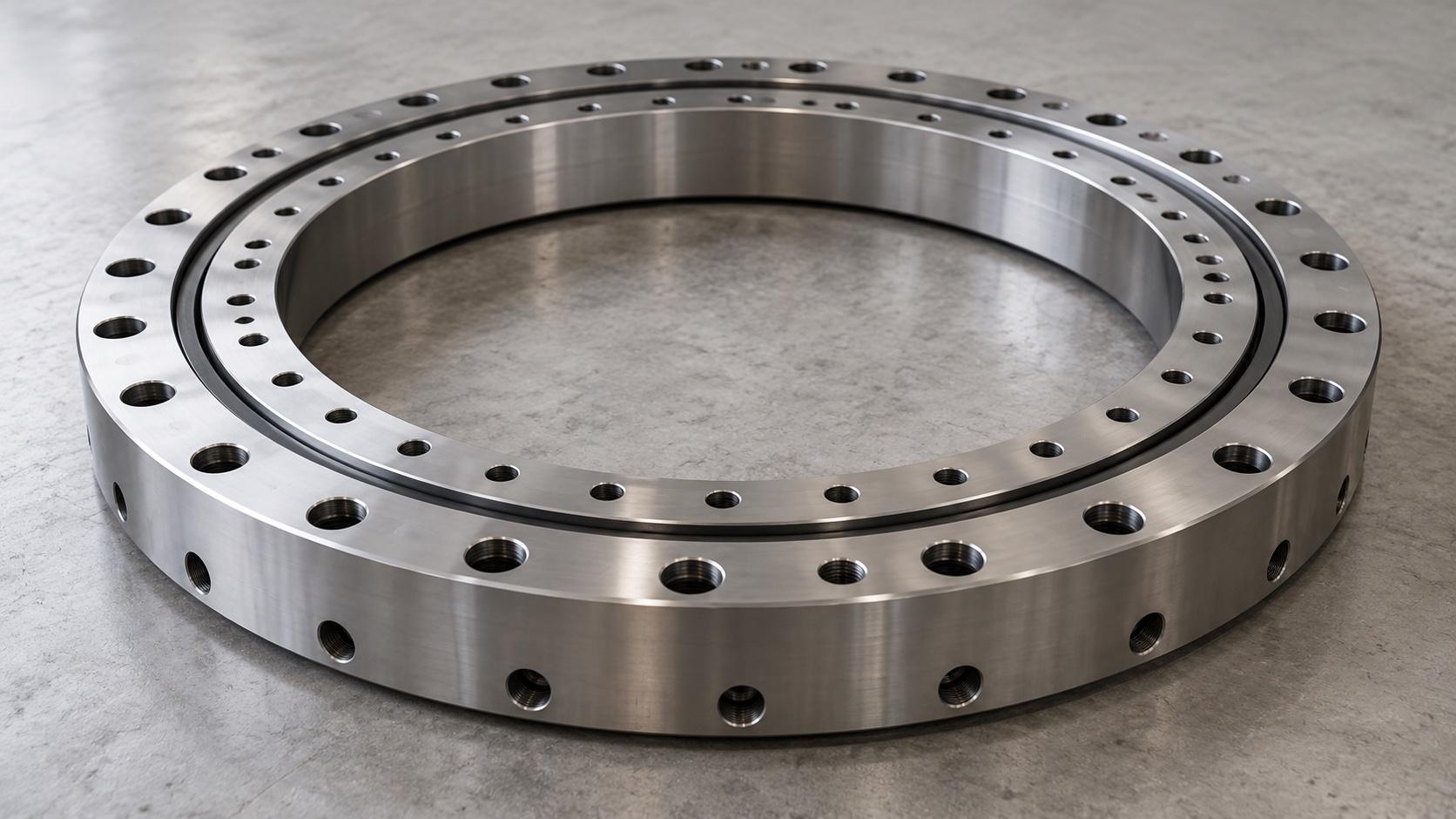
Check The Bearing Interface
For a suspected slewing bearing, compare the two mounting faces, the inner and outer diameters, overall height, hole count, bolt-circle geometry, and the space available around the central opening. Identify the fixed and rotating rings. A replacement also needs the correct locating geometry, clearance or preload requirements, seals, and accuracy requirements where these are specified. A similar outside diameter alone cannot establish interchangeability.
Gear arrangement is another distinct question. Slewbearingtec offers internal-gear, external-gear, and gearless slewing bearings. A geared ring transfers torque through its gear teeth and mating drive; a gearless ring still needs an external way to produce rotation. The equipment drawing should show where the pinion or other drive sits and whether the gear is part of the bearing being requested. Do not infer gear teeth from the words snap ring bearing.
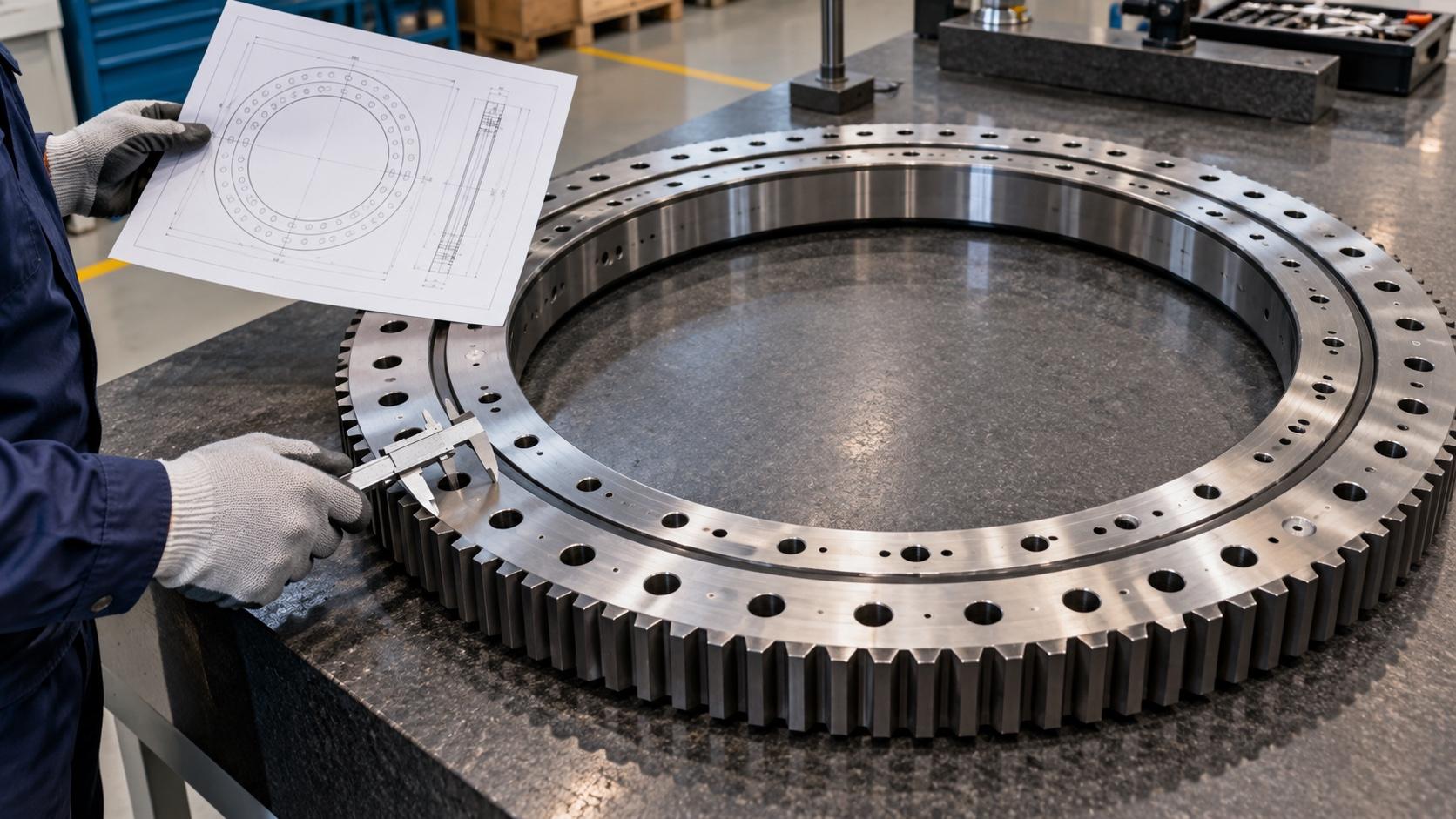
Describe The Duty Before Selecting A Design
If the assembly does require a slewing bearing, provide the axial and radial forces together with the overturning moments that occur in the same operating conditions. Include rotation speed or swing angle, start-stop frequency, shock or vibration, expected service life, mounting orientation, and the environment. The support structure and its flatness also matter because deformation can change how load is distributed through the raceway.
Slewbearingtec's range includes single-row ball, double-row ball, three-row roller, and crossed-roller designs. Those families cannot be ranked for a machine from a short part name. Load combinations, stiffness, precision, available space, and duty cycle determine which design deserves a closer check. Final selection should use the controlled drawing and the applicable bearing load data, together with the bolts and surrounding structure.
Send A Clear Enquiry
A useful enquiry can be short if it contains the right evidence: the assembly drawing, a photograph showing the part in place, any existing bearing number, and a note identifying the component called the “snap ring.” Add the machine duty, the dimensions that must fit, and the intended drive arrangement. If an existing unit is being replaced, mark the drawing revision and show any changes to the mounting structure.
For a snap ring bearing enquiry, these details prevent a name from hiding two different tasks. They let the supplier determine whether the request concerns a separate retention detail, a different bearing type, or a slewing bearing that should be checked against the full assembly. Only then can a Slewbearingtec product be evaluated on its actual interfaces and loads.