SWBTEC


Ceramic Ball Slewing Bearing Manufacturers In 2026
Global ceramic ball slewing bearing manufacturers in 2026 are shifting production lines toward aerospace-grade silicon nitride integration to meet strict sub-micron precision demands in offshore wind pitch systems and semiconductor manufacturing equipment. Sourcing a reliable ceramic ball slewing bearing company now requires auditing their raw material powder supply chain and internal grinding tolerances, rather than relying on outdated static load catalogs. You are about to see the exact technical auditing frameworks, dynamic failure data, and hidden supply chain bottlenecks that top-tier procurement directors use to vet heavy-machinery bearing suppliers this year.
Supply Chain Realities and Technical Shifts
Procurement directors face a severely constrained supply chain for high-precision hybrid bearings in 2026. The demand for non-magnetic, electrically insulating slewing rings has outpaced the global synthesis capacity of Class-1 silicon nitride powder. Purchasing managers must bypass regional distributors and deal directly with manufacturers capable of proving their raw material origins.
Leading facilities have abandoned traditional induction hardening for raceways in favor of advanced vacuum carburizing paired with deep cryogenic treatments. This metallurgical upgrade prevents the extreme hardness of the ceramic balls from deforming the steel raceway under heavy moment loads. A supplier failing to document their specific cryogenic treatment curves is a high-risk liability for your project.
The C-P-R Sourcing Pyramid
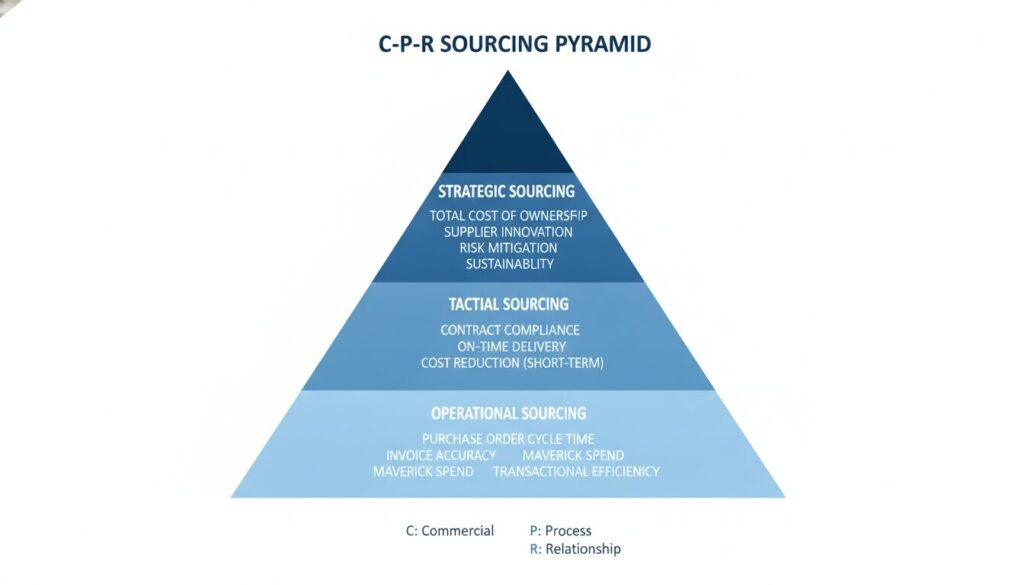
Evaluating a potential manufacturing partner requires a ruthless filter against marketing claims. The C-P-R Sourcing Pyramid systematically eliminates unqualified suppliers through three non-negotiable metrics.
C – Capacity Verification Beyond Catalog Specs
Manufacturers routinely inflate their production capacity for large-diameter ceramic slewing rings. Real capacity is dictated by the facility’s possession of high-precision hard-turning lathes and temperature-controlled grinding centers large enough to handle rings over 2 meters in diameter. Auditors must request machine-tool inventory lists and spindle-hour logs. A true tier-one facility will provide real-time lead times based on their grinding center availability, not just stock levels of raw steel.
P – Precision Longevity Under Dynamic Load
Static load capacity means nothing in continuous-rotation applications like CT scanner gantries or radar arrays. High-end manufacturers provide Weibull distribution charts demonstrating the L10 fatigue life specifically for their ceramic-steel hybrid configurations. Procurement teams must demand dynamic run-out test reports measured at the final assembly stage under simulated axial and radial loads.
R – Raw-Material Traceability
The structural integrity of a ceramic ball slewing bearing depends entirely on the porosity of the silicon nitride balls. Low-tier factories source generic ceramic spheres produced via hot pressing, which harbor microscopic voids. Premium manufacturers enforce strict Hot Isostatic Pressing protocols for their rolling elements. Securing a bill of materials that traces the ceramic elements back to the original powder synthesis batch prevents catastrophic mid-project failures.
The Dynamic Vibration “Spalling Trap”
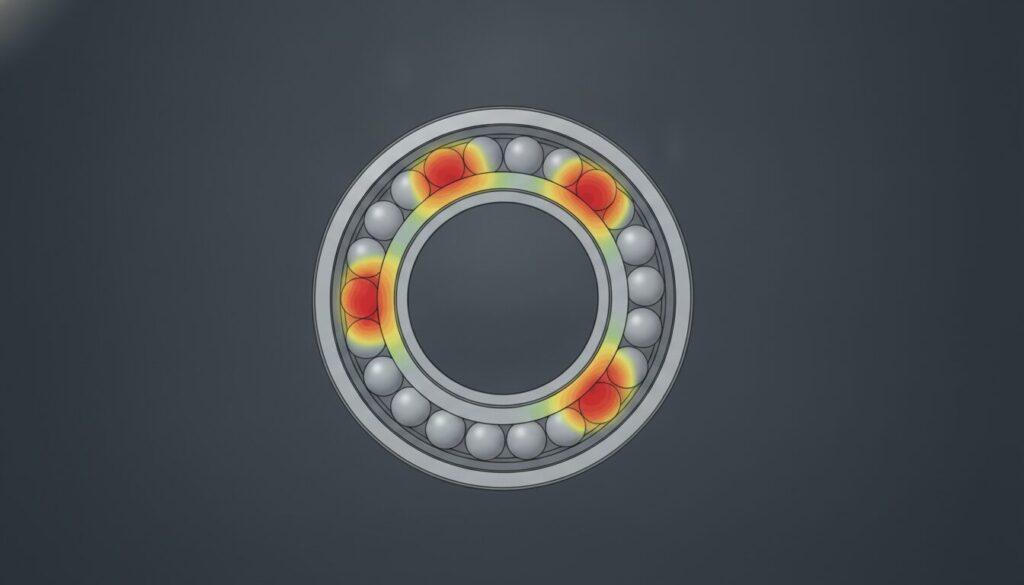
Sourcing engineers frequently trigger catastrophic machine failures by ignoring the raceway conformity ratio. Procurement often selects a bearing based purely on the high compressive strength of ceramic balls. The extreme rigidity of Si3N4 creates a microscopic point-contact stress spike on the steel raceway during dynamic vibrations.
Factories lacking advanced engineering departments will use standard steel-ball raceway geometries for their ceramic models. This geometric mismatch causes rapid micro-spalling of the steel track within the first 1,000 hours of operation. You must explicitly ask the engineering team at the ceramic ball slewing bearing company to provide their specific “osculation ratio” calculations tailored for hybrid materials. An osculation ratio below 0.96 for ceramic applications guarantees premature raceway fatigue.
| Configuration Type | Typical Osculation Ratio Range | Failure Timeline (e.g., L10 Life) | Key Failure Modes | Notes |
| Standard Bearing (Steel) | 0.52 – 0.60 | 10,000 – 20,000 hours | Pitting, Spalling, Brinelling, Cage Wear | Susceptible to lubricant degradation and fatigue. |
| Ceramic Hybrid Bearing | 0.48 – 0.55 | 30,000 – 50,000 hours | Raceways fatigue (if steel), cage wear (polymer) | Reduced friction, higher speeds, electrical isolation. |
2026 Hybrid Bearings vs. Legacy Steel
Engineering researchers completed an 8,000-hour accelerated salt-spray and high-moment load test in early 2026, directly comparing new-generation hybrid slewing bearings against traditional all-steel variants. The test simulated conditions identical to offshore floating crane operations.
The data revealed a stark contrast in frictional torque degradation. Traditional steel bearings exhibited a 34% increase in rotational friction after 4,000 hours due to raceway oxidation and micro-welding. The ceramic ball slewing bearings maintained a flat friction curve, showing less than a 3% variance over the entire 8,000-hour cycle. The lack of adhesive wear between dissimilar materials practically eliminates the need for emergency relubrication intervals in remote environments.
Total Cost of Ownership Economics
Upfront purchase prices for custom ceramic hybrid slewing rings remain 40% to 60% higher than their steel counterparts. Smart capital expenditure modeling absorbs this initial hit by calculating the deferred operational expenditure.
Maintenance teams operating offshore or in cleanroom environments face massive downtime costs for bearing replacements. Replacing a slewing ring on a 10-megawatt wind turbine costs upwards of $300,000 in specialized crane rentals and lost power generation. The extended L10 life and self-insulating properties of ceramic balls—preventing electrical pitting from stray currents—eliminate at least one major replacement cycle over a 20-year project lifespan.
FAQs
How do I verify the quality of a ceramic ball slewing bearing company?
You verify a manufacturer by auditing their CNC grinding capabilities, requesting Hot Isostatic Pressing certificates for their silicon nitride balls, and reviewing their L10 dynamic life calculations specific to hybrid bearing structures.
What is the lead time for custom ceramic ball slewing bearings in 2026?
Standard production runs for large-diameter hybrid slewing rings take between 16 to 24 weeks. Custom designs requiring specialized raceway hardening and aerospace-grade ceramic ball sourcing extend lead times to 28-36 weeks.
Why do hybrid slewing bearings fail prematurely?
Premature failure usually stems from poor raceway conformity. Using standard steel-ball raceway geometries with highly rigid ceramic balls creates extreme point-contact stress, leading to rapid micro-spalling of the steel track.
Do ceramic ball slewing bearings require lubrication?
Yes. Manufacturers still require specific base-oil greases to protect the steel raceways from corrosion and to reduce friction between the balls and the spacer cages, despite the ceramic balls themselves being immune to micro-welding.
How does stray current affect heavy machinery bearings?
High-frequency stray currents from variable frequency drives arc across the ultra-thin lubrication film in steel bearings, causing electrical pitting and fluting. Ceramic balls are natural insulators, completely blocking this electrical discharge path.
What industries consume the most ceramic slewing rings?
Medical imaging, semiconductor manufacturing, and offshore renewable energy sectors are the primary consumers due to their strict requirements for non-magnetic, low-friction, and high-rigidity components.
Can a manufacturer upgrade an existing steel slewing bearing to ceramic?
Engineers cannot simply swap steel balls for ceramic ones. The manufacturer must redesign the internal raceway curvature, upgrade the steel alloy, and adjust the hardening depth to accommodate the specific load-bearing characteristics of silicon nitride.