SWBTEC


Swing Gear Noise: How To Inspect An Excavator Slew System
A knock as an excavator starts to slew is easy to blame on the swing gear. Yet the sound can travel through the upper structure, and several components can produce a similar symptom. Before ordering a gear ring, note exactly when the noise occurs. Does it appear only as the upper structure changes direction, at the same angle on every turn, or throughout the movement? That observation gives the inspection a useful starting point.
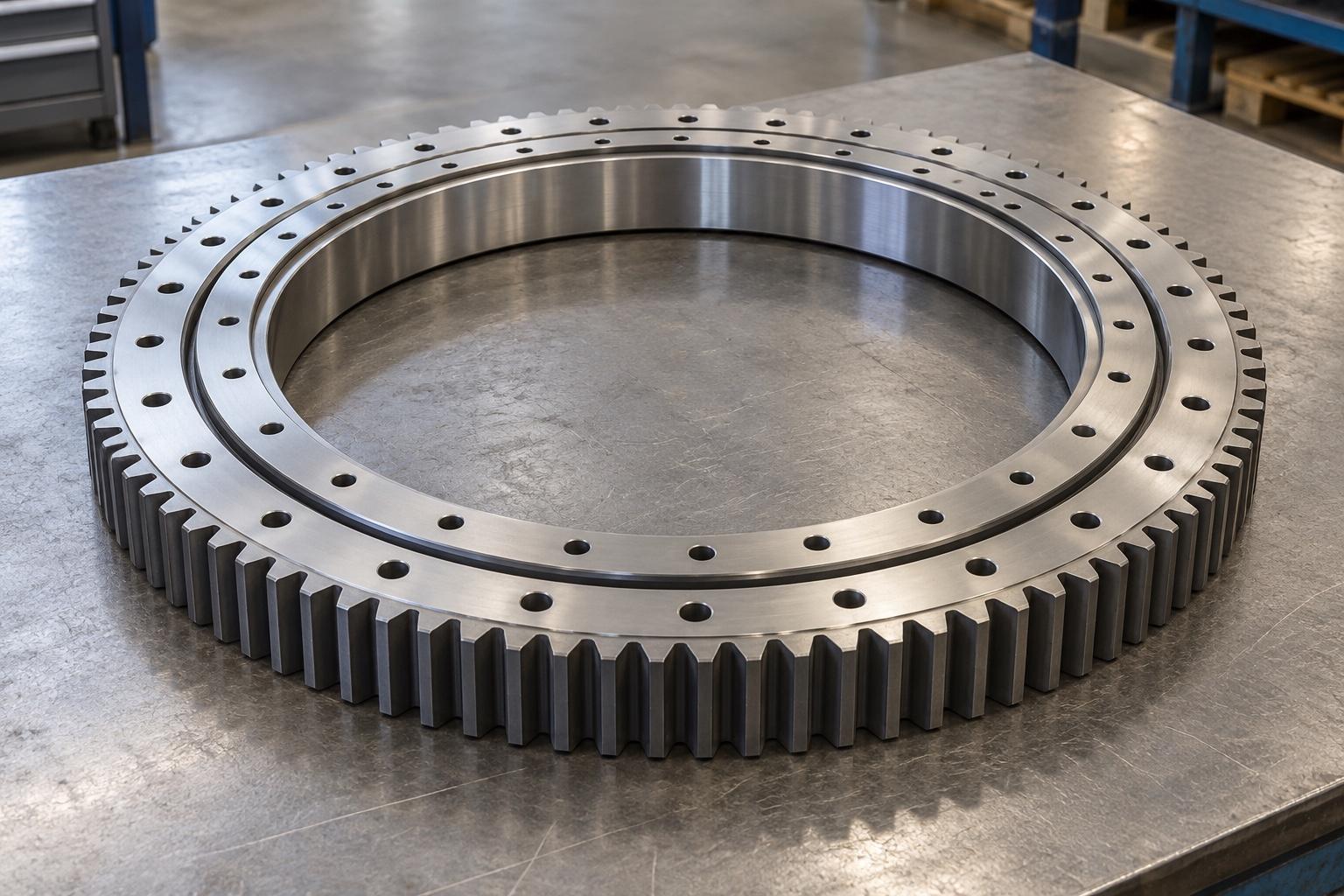
In an excavator, the swing system includes a slewing bearing, a drive pinion, a reducer and other connected parts. The bearing supports the upper structure and carries combined axial, radial and overturning loads. Where one of its rings has gear teeth, the pinion drives those teeth to rotate the structure. A complaint described as “swing gear noise” does not, by itself, identify which part needs repair.
Start With The Pattern Of The Noise
Record the position of the upper structure when the sound occurs, along with the direction of rotation and whether the machine is starting, stopping or running steadily. A repeated knock at a particular slew angle makes a local tooth defect, raceway defect or interference worth investigating. An impact mainly on reversal may point toward clearance in the gear mesh, reducer backlash, brake behavior or bearing wear. These are clues, not a diagnosis.
Also note any change in turning resistance, vibration or operating pressure. A rising load on the drive can come from a tight gear mesh, but it can also come from contamination, distorted mounting structures, a brake or the reducer. Keep the observations tied to machine position and operating conditions so that a technician can compare them with the physical inspection.
Inspect The Gear Ring And Pinion Together
Follow the equipment manufacturer's shutdown and isolation procedure before removing a guard or approaching the gearing. Prevent unintended movement of the upper structure and support the machine as required by its service instructions. Once access is safe, inspect the full accessible circumference of the ring teeth and the mating pinion. Look for chipped or cracked teeth, pitting, scoring, unusual polishing, corrosion and debris in the lubricant. Photograph any suspect area and record its position.
The wear pattern matters. Damage concentrated near one side of a tooth face can indicate an alignment or support problem. A damaged ring tooth may also mark the pinion that meshes with it. Replacing only the visibly worse component without checking its mate can leave the original cause in place.
Check Mesh Around The Rotation
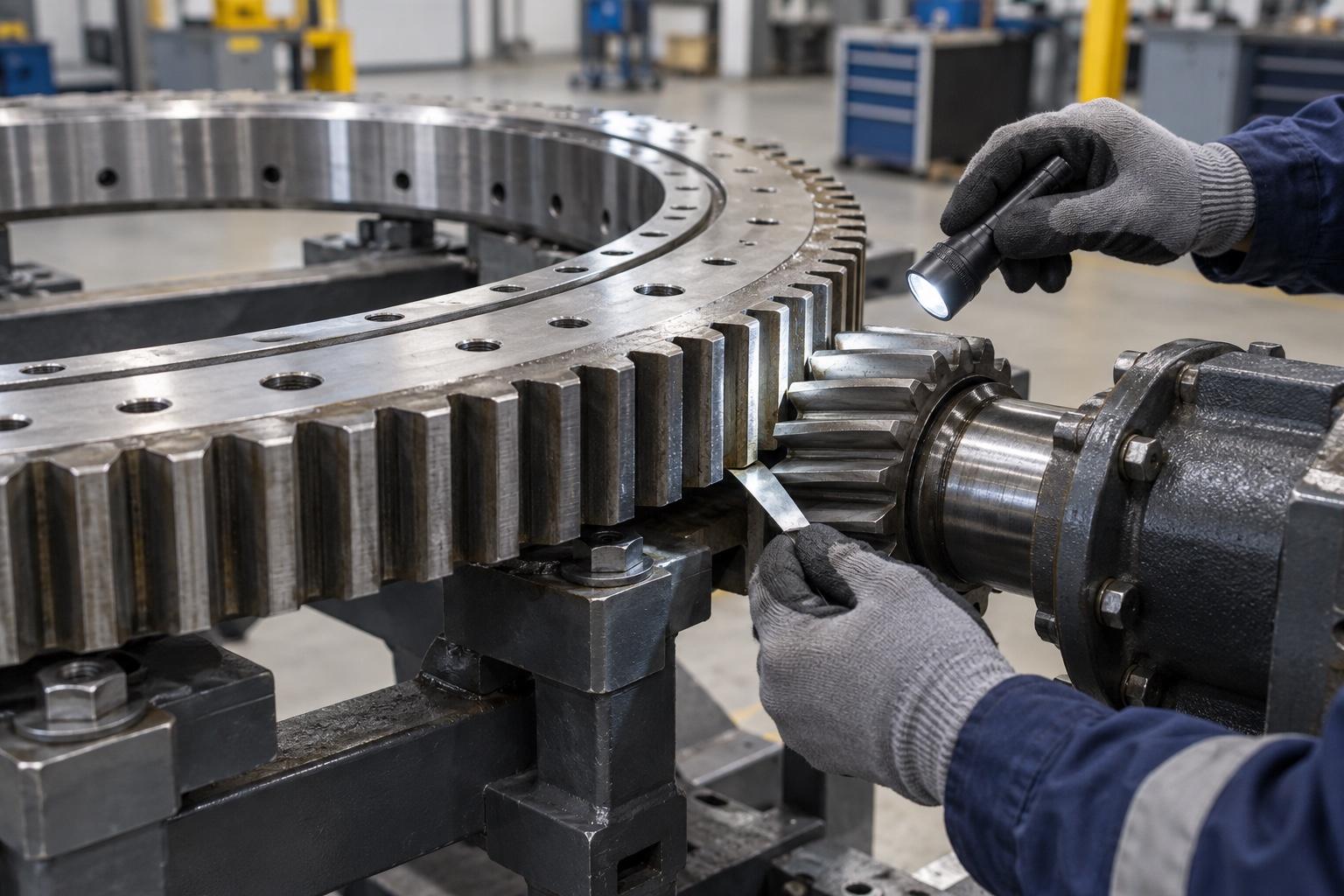
Backlash is the clearance between mating gear teeth. Too little clearance can contribute to binding, heat and high local tooth load. Too much can add impact, noise and lost motion. The acceptable value and the place to set it must come from the equipment and bearing drawings; a universal number is not reliable here.
Measure at the specified reference position, then check at several positions around the complete rotation using the approved method. A mesh that feels free at one angle may become tight elsewhere because of runout, mounting eccentricity or structural distortion. Examine the tooth contact pattern as well as the clearance. If contact shifts to an edge or the readings vary outside the approved limits, inspect pinion alignment, center distance, mounting faces and the supporting structure before changing the adjustment.
Slewbearingtec's product range includes external-geared QW and internal-geared QN slewing bearings. That range illustrates why tooth position must be confirmed on the actual machine: an external pinion and an internal pinion occupy different locations. Neither arrangement can be inferred from the phrase “swing gear.”
Separate Lubrication From Gear Damage
The bearing raceway and the open gear teeth may have different lubrication points and requirements. Grease present in the raceway does not prove the tooth flanks are protected. Check whether the gear lubricant reaches the full contact area and whether it contains water, grit or metal particles. Confirm the approved lubricant, quantity and service interval from the machine documentation.
Cleaning away a contaminated lubricant and restoring the specified lubrication may address one cause of abnormal wear, but it does not restore cracked, broken or heavily damaged teeth. If tooth damage is present, inspect the pinion, output shaft, center distance, mounting structure and possible shock events before deciding what to replace.
Decide On The Repair Scope
If the gear teeth look sound, continue the diagnosis through the bearing, reducer, brake, mounting bolts and adjacent structure. If damage is found, compare the original part number, controlled drawing and measured interfaces before ordering a replacement. Diameter and bolt-hole pattern alone do not prove interchangeability; gear geometry, mounting height, locating features, rotating ring, bearing clearance and load capacity also matter.
After repair, record the gear contact, backlash at the required positions, lubrication condition, bolt installation checks and a controlled test run. A clear baseline makes a later change easier to identify. More importantly, it keeps a swing gear symptom from turning into a repeat failure caused by an unchecked pinion or mounting problem.