SWBTEC


Retaining Ring Bearing: Identify The Mounting Design
A request for a retaining ring bearing sounds specific, yet it leaves an important question open: is the retaining feature a separate part of the assembly, or does the buyer mean a ring-shaped bearing for a rotating joint? A name alone cannot settle the mounting method, the load path, or the bearing type. A drawing and a short description of the machine will make the request much easier to evaluate.
What Does The Assembly Need To Do?
Start with the motion. Does one structure rotate continuously, swing through a limited angle, or move only occasionally for positioning? Identify which side stays fixed and which side moves. Then record the forces the bearing must carry: axial force along the rotation axis, radial force across it, and any overturning moment. These loads should be described as combinations that occur in service, including shock or non-operating cases where relevant. Listing three separate maximum values without their relationship can misrepresent the actual duty.
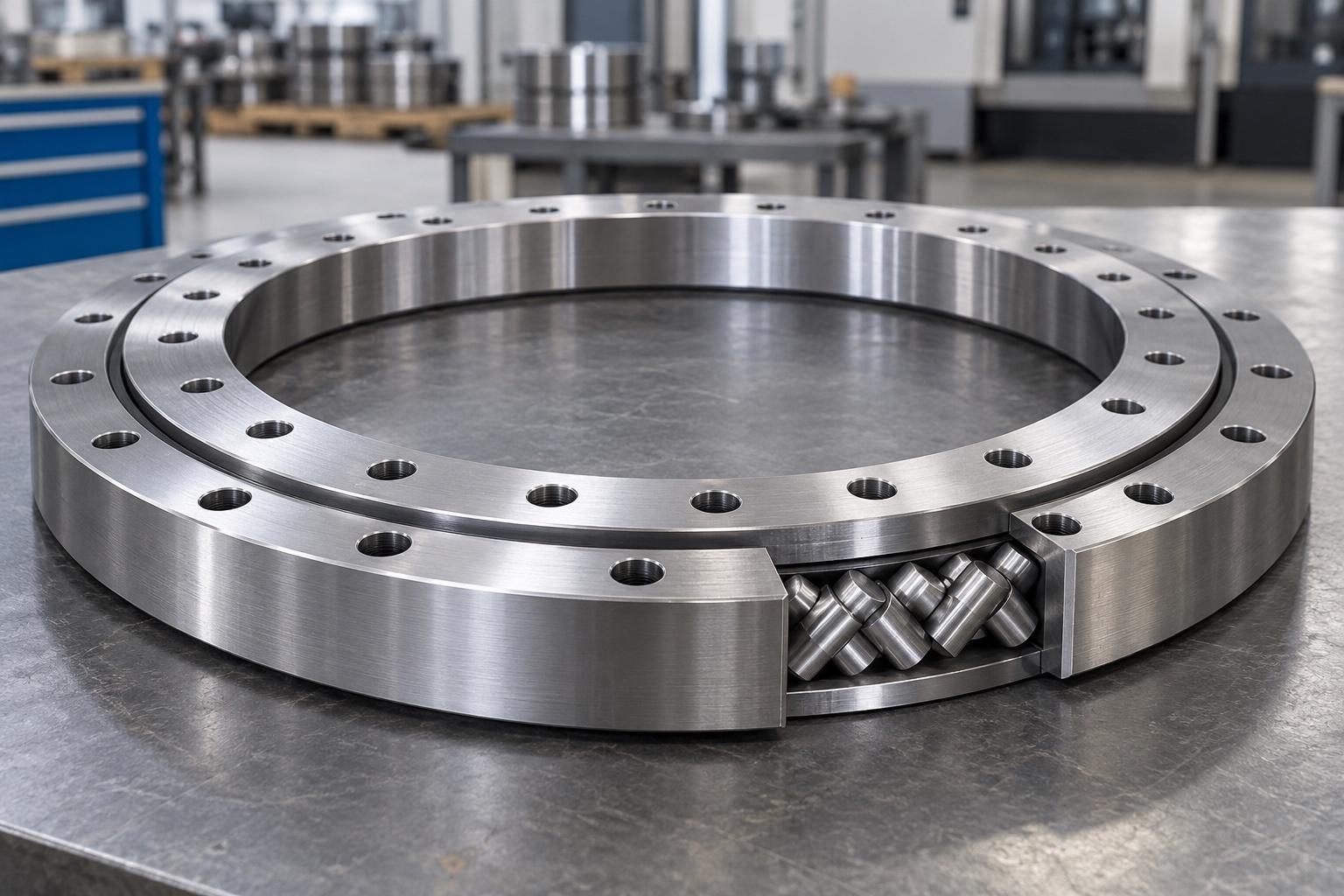
For a large rotating joint, a slewing bearing can connect two structures while carrying axial and radial loads and an overturning moment at one support position. Slewbearingtec's product range includes single-row ball, double-row ball, three-row roller, and crossed-roller designs. The structure that suits one machine cannot be chosen from the words retaining ring bearing alone. Available space, stiffness, precision, movement pattern, service life, and the load combinations all matter.
Identify How The Rings Are Located
On a slewing bearing drawing, the inner and outer rings provide the mounting interfaces. Their hole patterns, support faces, and orientation determine how the bearing connects to the surrounding structure. One ring is fixed and the other moves, but which one rotates depends on the machine design. If a separate retaining feature appears elsewhere in the assembly, show it on the drawing and state its purpose. Do not assume that a bearing's mounting bolts, a locating feature, and a separate retaining part are interchangeable.
The drawing should show the inner and outer diameters, overall height, central opening, mounting-hole counts and pitch circles, locating features, and clearance to adjacent parts. For a geared slewing bearing, add the gear location and the mating pinion details. Slewbearingtec lists internal-gear, external-gear, and gearless slewing bearing designs; gear arrangement and rolling-element structure are separate choices. A gearless bearing, for example, does not provide its own drive force.
Check The Complete Interface Before Replacing A Bearing
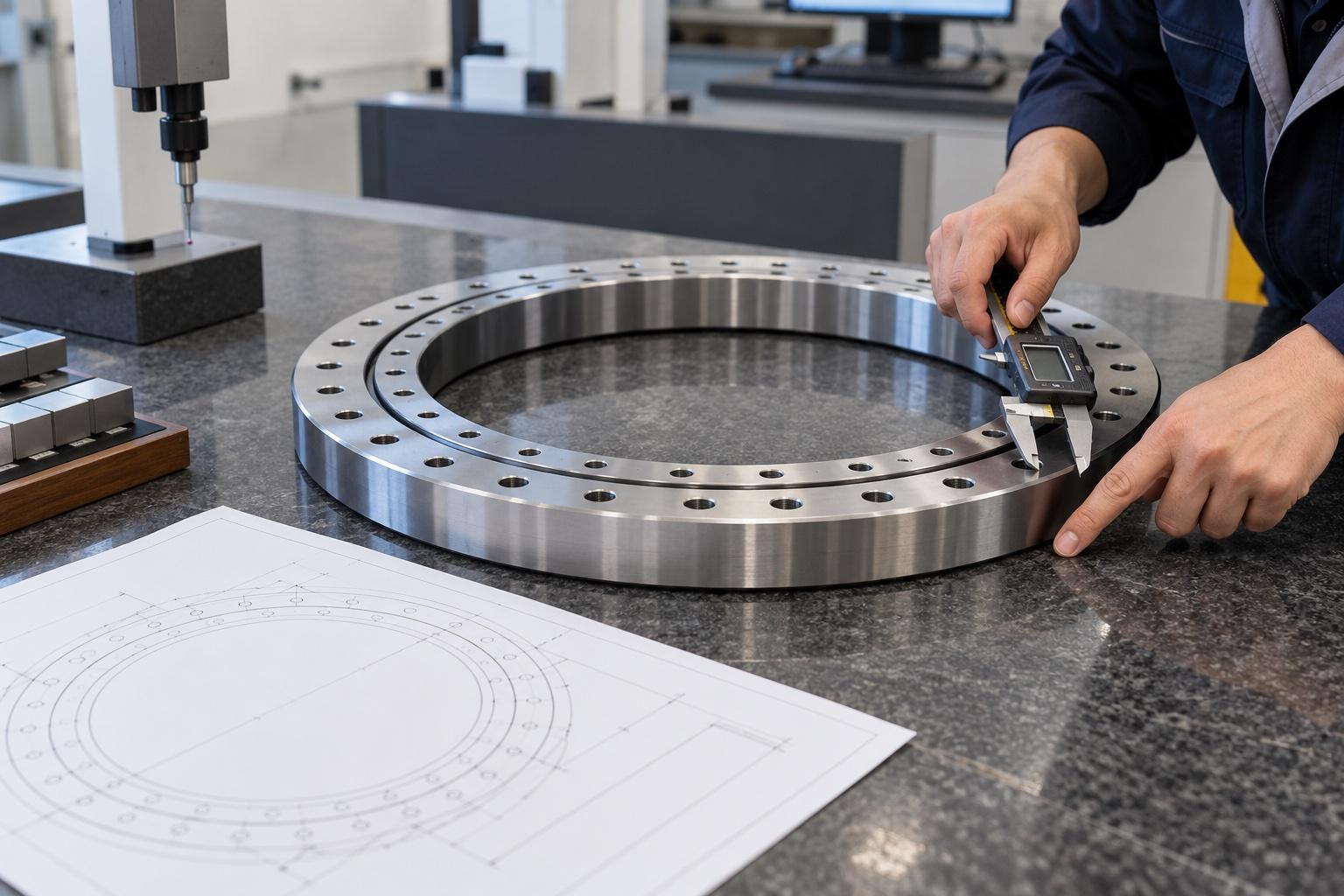
Matching the visible ring diameter is not enough for a replacement. Compare the original and proposed drawings at the same revision level. Check mounting height and hole pattern, the stationary and rotating sides, locating geometry, gear data if present, clearance or preload, and the required running accuracy. Confirm that the proposed design covers the machine's combined loads. Inspect the surrounding support structure and the drive components as well, particularly if the old bearing failed or wore unevenly.
The mounting faces deserve attention before installation. A local high spot, burr, thick coating, or uneven support can distort a ring and concentrate load in the raceway. Installation bolts need the specified grade, quantity, tightening sequence, and preload. A generic torque value is unreliable when thread lubrication or contact conditions differ from the procedure used to establish it. For geared assemblies, backlash and contact should be checked at the specified positions and through the working rotation range.
Give The Supplier Enough To Make A Useful Recommendation
Send the assembly drawing, the existing bearing identification if there is one, and a description of the equipment. Include load combinations, speed or swing angle, operating cycle, required accuracy, environment, available envelope, and the desired gear arrangement. State whether a separate retaining component is part of the request and provide its drawing. Also identify the documents and inspections needed with the bearing.
For a retaining ring bearing enquiry, this information does more than speed up a quotation. It helps distinguish a bearing selection question from an assembly-retention question and gives both sides a clear basis for checking the mounting design. Once the drawings and duty are aligned, a suitable Slewbearingtec bearing family can be assessed without relying on an ambiguous name.