SWBTEC


Slew Bearings & Slewing Rings: High-Performance Sourcing Guide
Selecting the right slew bearing (also known as a slewing ring oder turntable bearing) is one of the most critical decisions in heavy machinery engineering. Whether you are a B2B wholesaler looking for a reliable manufacturing partner or a project manager dealing with premature bearing failure, the stakes are high. A single failure doesn’t just mean a broken part; it means catastrophic downtime and safety risks.
In this comprehensive guide, we move beyond the basics. We will analyze the engineering nuances that separate premium slewing ring bearings from budget alternatives, solve the industry’s most common pain points, and provide the “insider tips” you need to vet slewing bearing manufacturers like a pro.
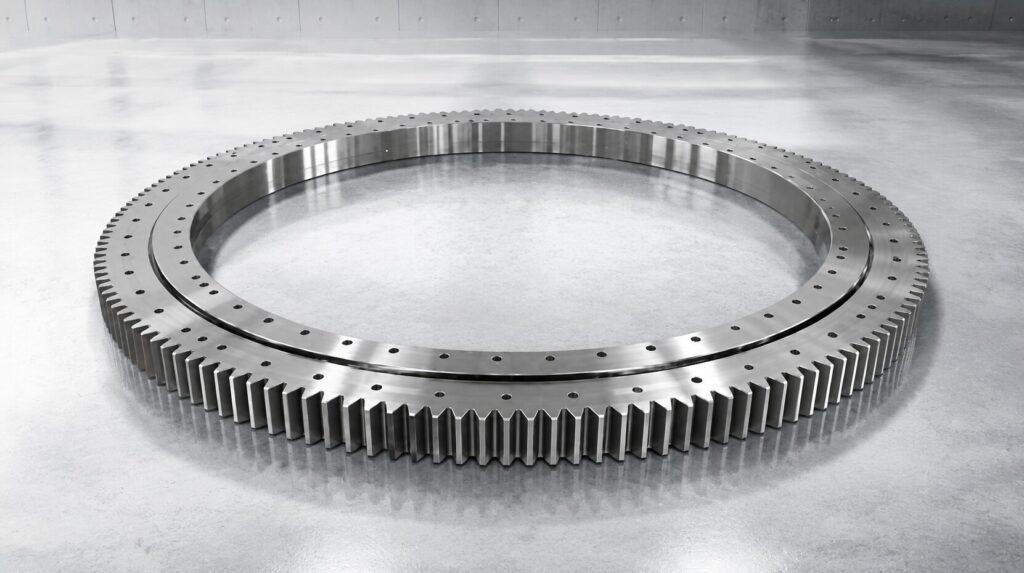
Table of Contents
- What is a Slew Bearing?
- Types of Slewing Ring Bearings: Which One Do You Need?
- Solving the 4 Most Common Slew Bearing Pain Points
- Beyond the Price Tag
- The Insider’s Secret: How to Verify Quality Without a Lab
- Installation and Maintenance: Extending the Life of Your Slew Ring
- Industry Trends: The Future of Slew Bearing Technology
- Summary & FAQ
What is a Slew Bearing?
At its simplest, a slew bearing is a rotational rolling-element bearing that supports a heavy but slow-turning or slow-oscillating load. Unlike standard ball bearings, a slewing ring is unique because it can handle axial, radial, and moment loads simultaneously.
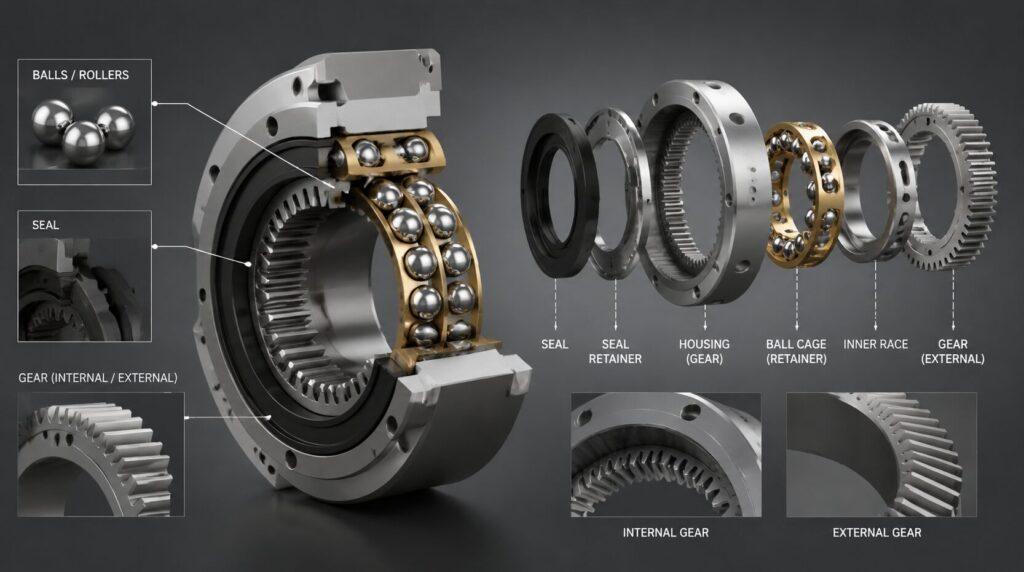
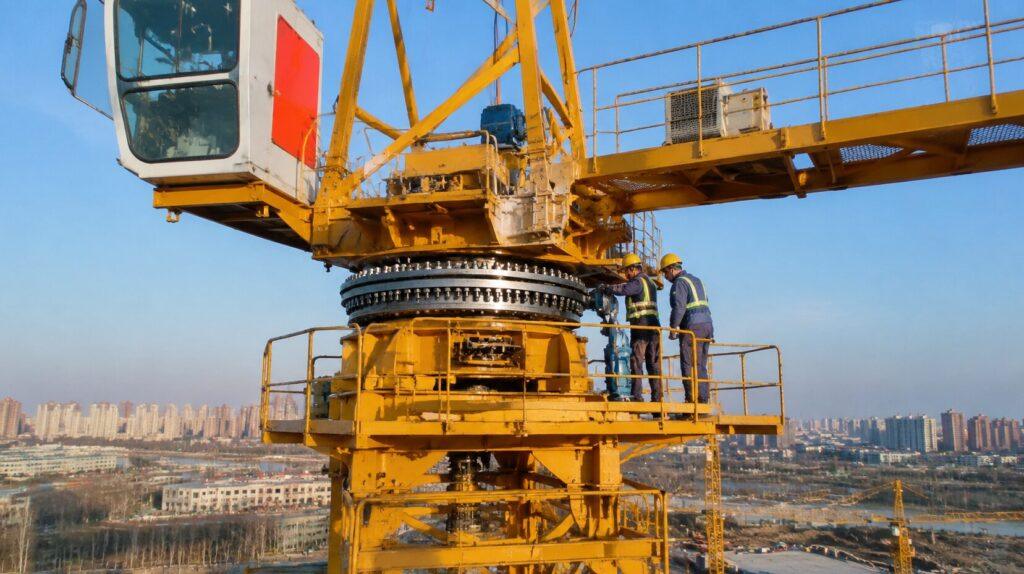
Often referred to as a turntable bearing, these components act as the “joint” in machinery—think of the rotating base of a construction crane, the pitch control of a wind turbine, or the precision movement of a medical CT scanner.
For wholesalers, understanding the terminology is key. While customers may search for slew bearings, slewing rings, or ring bearings, they are all describing the same critical mechanical interface that allows for controlled rotation under immense pressure.
Types of Slewing Ring Bearings: Which One Do You Need?
Choosing the wrong structure is the leading cause of project overruns. As a slew bearing manufacturer, we categorize these into four primary designs:
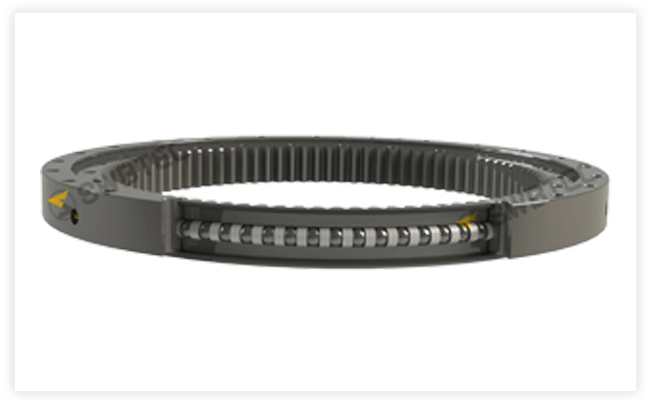
Single-Row Four-Point Contact Ball Bearings:
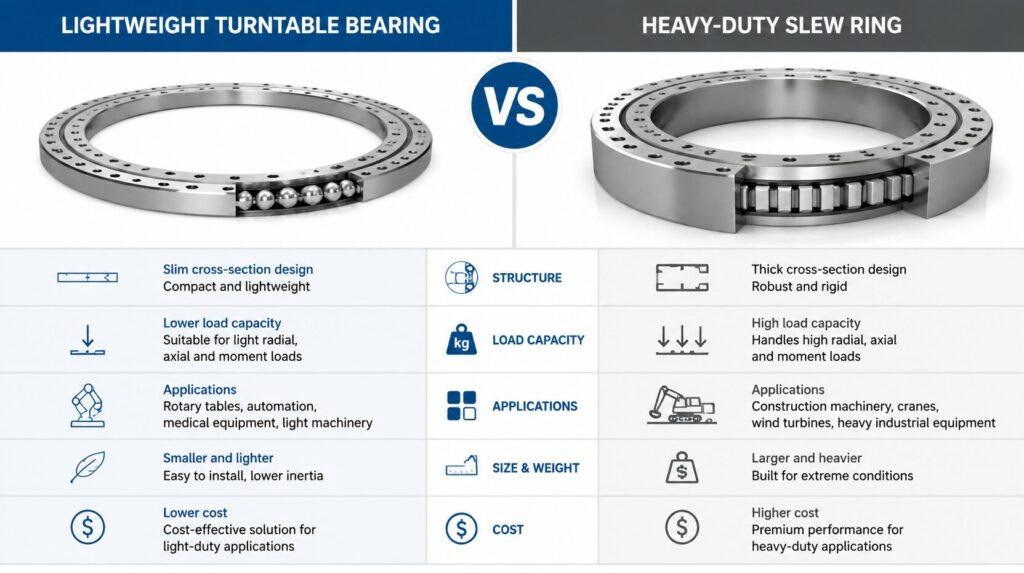
The “jack of all trades.” These are cost-effective and handle combined loads well. Ideal for smaller Krandrehverbindungen and water treatment equipment.
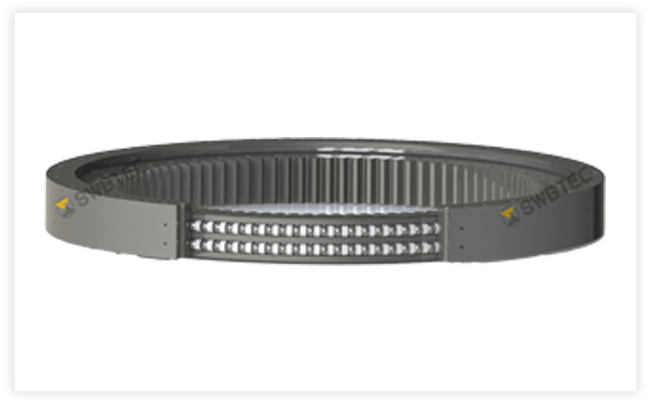
Double-Row Ball Bearings:
These have two rows of steel balls. They are designed for higher axial loads and are used where the mounting structure might be less rigid.
Crossed Roller Bearings:
These offer high dynamic stiffness and are the gold standard for applications requiring high precision and minimal friction, such as industrial robotics.
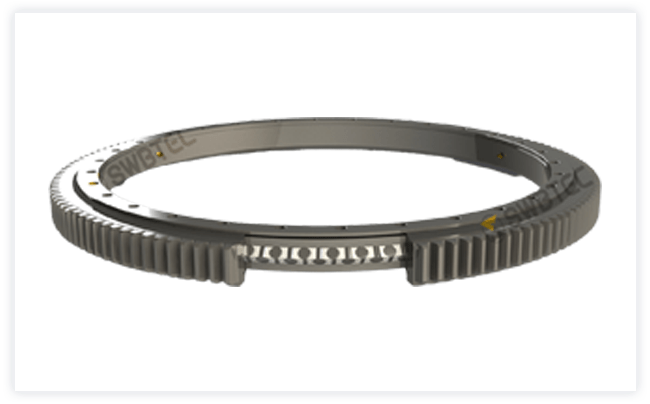
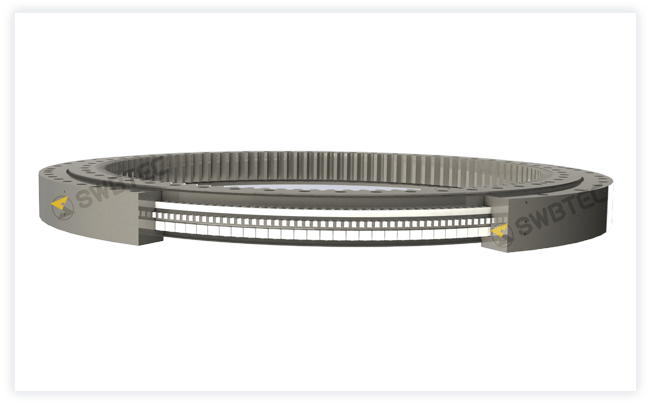
Triple-Row Roller Bearings:
The heavyweights. By separating the loads into different rows of rollers, these slewing bearings offer the highest capacity possible. You’ll find these in heavy-duty offshore cranes and mining excavators.
Solving the 4 Most Common Slew Bearing Pain Points
In our decades of experience, we’ve found that B2B buyers usually face the same four frustrations. Here is how to solve them:
Premature Wear and Spalling
The Problem: The bearing begins to “pitting” or “flaking” on the raceway long before its calculated service life ends.
The Solution: This is often caused by insufficient induction hardening. Ensure your slewing bearing supplier uses deep-layer hardening (usually 3-5mm) on the raceways to withstand high-stress cycles.
Gear Teeth Failure (Broken or Excessive Wear)
The Problem: In Krandrehverbindungen, the integrated gears often fail due to misalignment or poor metallurgy.
The Solution: Look for “quenched and tempered” gear teeth. If your application involves high shock loads, specify hardened teeth to prevent deformation.
Seal Degradation and Contamination
The Problem: Dust, water, or chemicals enter the raceway, leading to rapid friction increase.
The Solution: Standard NBR seals are not enough for harsh environments. Request Viton seals for high-heat applications or reinforced multi-lip seals for maritime use.
Long Lead Times from Tier-1 Brands
The Problem: Waiting 24-40 weeks for a replacement from major brands like SKF or Kaydon.
The Solution: Source from specialized slew ring bearing manufacturers who maintain a stock of forged rings. A flexible manufacturer can often reduce lead times to 6-8 weeks without sacrificing ISO-certified quality.
Beyond the Price Tag
Material Integrity (The Forging Quality):
Many low-cost bearings use recycled scrap steel. High-quality slew bearings should use 50Mn or 42CrMo forged steel. 42CrMo is superior for low-temperature environments (preventing brittle fracture).
Logistics and Packaging:
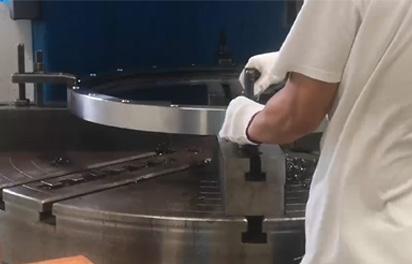
A 500kg slew ring can easily warp if not supported correctly during shipping. Ensure your supplier uses vacuum-sealed anti-rust packaging and reinforced steel-frame crates.

Technical Documentation:
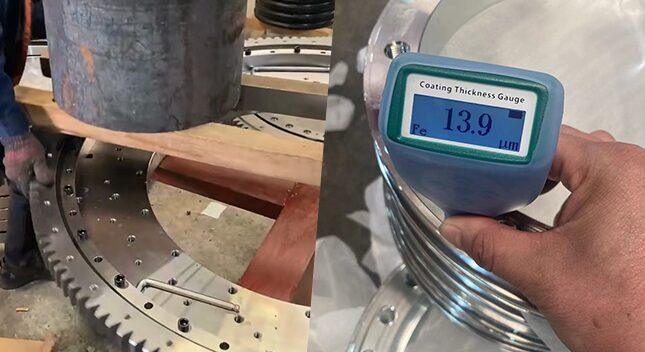
A professional manufacturer provides more than just an invoice. You should receive Material Test Reports (MTRs), Hardness Reports, and Clearance Certificates with every shipment.
The Insider’s Secret: How to Verify Quality Without a Lab
How can a wholesaler tell if a Großwälzlager is high quality just by looking at it? Here are three “insider tips”:
- The “Start-Stop” Sound Test: Rotate the bearing manually (if possible) or under a light load. It should produce a consistent, low-frequency hum. Any “clicking” or “grinding” suggests uneven raceway grinding or debris—a major red flag.
- The Surface Finish of the Raceway: If you have access to a cross-section or can see through the grease hole, look for a “mirror finish.” Rough grinding marks are “stress concentrators” where cracks will eventually start.
- Grease Consistency: High-end manufacturers don’t just use “generic grease.” They use specific formulations like Mobilux EP2. If the grease looks thin or “oily” at room temperature, it’s a sign of a low-quality lubricant that will fail under pressure.
How To Extending the Life of Your Slew Ring
A slew ring bearing is only as good as its installation.
- Flatness of the Mounting Surface: This is the killer of bearings. If the mounting surface is off by even 0.5mm, the ring will distort, causing localized “hot spots” of pressure.
- Bolt Tensioning: Use a calibrated torque wrench. Never “guess” the tightness. Follow a “star pattern” to ensure even pressure distribution.
- The 100-Hour Rule: After the first 100 hours of operation, re-check the bolt torque. Heavy vibrations during the initial “break-in” period can loosen fasteners.
The Future of Slew Bearing Technology
The industry is moving toward Smart Slewing Bearings. We are seeing an increase in demand for bearings integrated with:
- Condition Monitoring Sensors: Built-in sensors that detect vibration and temperature spikes before a failure occurs.
- Green Energy Optimization: Specialized slew ring bearings for solar trackers that require ultra-low friction to minimize the energy consumption of the tracking motors.
- Lightweighting: The use of high-strength alloys to reduce the weight of turntable bearings in aerospace and mobile robotics.
Choosing the Right Partner
Finding a slew bearing manufacturer who understands the balance between cost and performance is vital for your business’s reputation. Whether you call it a slewing ring, a turntable bearing, or a slew ring bearing, the priority remains the same: Reliability.
By focusing on material quality, precise hardening, and proper maintenance, you can reduce downtime and provide your customers with a product that stands the test of time.
FAQ: Frequently Asked Questions
Q1: What is the difference between a slew bearing and a standard ball bearing?
A: Unlike standard bearings, slew bearings feature a large diameter (up to 5000mm+), integrated gears (internal or external), and mounting holes. They are specifically designed to handle moment loads (tipping forces) that would snap a standard bearing.
Q2: How often should I lubricate a slewing ring?
A: For general industrial use, every 100 to 200 hours of operation. For harsh environments (construction, maritime), we recommend every 50 hours. Always rotate the bearing while pumping grease to ensure even coverage.
Q3: Can a damaged slew bearing be repaired?
A: Yes, in many cases. If the raceway is slightly worn, it can be re-ground and fitted with larger rolling elements. However, if the gear teeth are broken or the forging is cracked, replacement is the only safe option.
Q4: Which material is better: 50Mn or 42CrMo?
A: 50Mn is excellent for standard applications and is more cost-effective. 42CrMo is a “premium” alloy steel that offers better toughness and fatigue resistance, making it the better choice for high-load or extreme-cold environments.
Q5: Why are slew bearings so expensive to ship?
A: Due to their large diameter and heavy weight, they are classified as “Oversized/Heavy” freight. They require specialized sea-worthy packaging to prevent “brinelling” (permanent indentation of the raceways) caused by vibrations during transit.
Are you looking for a high-performance slew bearing manufacturer to support your wholesale business? SWBTEC provides ISO-certified slewing ring bearings with industry-leading lead times. Contact our engineering team today for a custom quote.